Tag Archives: 茶文化

茶道教学茶艺表演茶道演示是不一样的-20131125周一喝茶慢-许玉莲

茶道教学茶艺表演茶道演示是不一样的

许玉莲

20131125周一喝茶慢MONDAY SLOW TEA

茶道教学的泡茶课教些什么?解说和示范泡茶方法,然后学生练习之。适合在什么场所上课呢?最好能够在正式教室,拥有学生泡茶练习时所需要用到的茶具、设备。被聘外出上课,老师需要带足够茶具到现场或请对方备齐所需茶器,不要把泡茶课变成一项没有泡茶,也不喝茶的课。我们还要要求到每位学生最好能够有一套可以完整操作的器皿,而不必与多人合用一套,这样学生才能摸到感受到。

接下来就要选场合,教学最好能在「闭门」情况下进行,就是要有一批「目标学生」,从头到尾把整堂课上完。但现在有些民间教学机构流行「被看见」,有时也把上课安排在公共场合(如卖场或活动)「开门」进行,即上课情形与在「闭门」教室举行的一模一样,不过四周无墙、透明,凡走过的人都可以看见大家在上课,觉得新奇的站着看看,不喜欢的转身走开。这时候应该只允许他们站在场外听和看,不被允许进场,一来有些人不喜欢当学生,二来人们抱着逛街血拼心态出门,突然间请他入座上课,师生都会产生突兀感觉。上课需要专心与尊重,如果让大家随意进进出出会影响学习的环境与态度。

无论上课地点属于「闭门」或「开门」,上课的方式是应用于一群正式报读的人,心里已经准备好的学生才能接受:我现在是来学习的。有些场合不能用教学方式,强迫大家上课会引起对方反感。要是大家只是为了应酬而入座,并不在意上了什么课,那么这样子的一堂课是没有必要存在的,勉为其难随便坐在这里的人也不会尊重茶道老师,茶文化也将变得一文不值。

有心想要上课的人,我们要给他实施正式的茶道教学。茶道教学是传授知识,通过解说和示范完成,学生付学费学了之后自己会做会说,便是造就了一门学问。

茶界想要引导新人入门或举办娱乐性较高的茶活动,不妨举办茶艺表演。茶艺表演是利用茶作为媒介,以歌舞、戏剧、话剧、默剧等手法为主,当作舞台节目演出,观众或随意或购票入场,或茶界有活动时,将之安排成观摩,大家就当作看表演。

在比较学术性的场合则适宜茶道演示,让大家在潜移默化中感悟对方的内涵,就不会发生互相排斥的现象。茶道演示可售票或邀请方式进行。茶道演示与茶艺表演与茶道教学的做法与意义不一样。茶道演示是只靠着泡茶、奉茶、喝茶动作让人们明白什么叫做茶道。茶人演示的动作与方法要让大家明白他在表达些什么。好的茶道演示的感动力大于上课和表演的方式。人们可带着去欣赏一个艺术作品的心态参与。

茶道教学的师资经过培训与认证制度可获得,有些茶人以此为职业。如今比较具争议性的是茶艺表演,目前发展情况是茶人或非茶人(泛指其他非茶业界)皆可担任「演员」,其茶艺表演中的内容与演出手法有些也和茶无关,我们关注茶艺表演的节目是否会成为茶文化发展的阻力呢。茶道演示是属于不喧哗,比较内敛深沉的一种表现茶道的方法,目前较少看到茶人公开采用此手法来演示给大家看,不知道是拥有此能耐的茶人不多,还是没有适合茶道演示的场合,还是人们不喜欢欣赏它。


  (2007)

先有课程内容,才谈茶道师资哪里来-20131120周三小方块-蔡荣章

先有课程内容,才谈茶道师资哪里来

蔡荣章

20131120周三小方块WEDNESDAY TEA CORNER

茶道老师就是教“茶道”的老师,强调的是以茶道为核心,当然也要会教制茶、识茶,但可以不会教茶树栽培、病虫害防治、土壤营养等。茶道老师需要分工的,不容易一个人什么课程都能上。这些分工要有相应的培训课程与能力认证方足以让茶道教育步上正轨,不论是学校的师资还是民间的师资。当然培训与认证也有不可靠者,例如只要缴费就保证可以取得证书,但大家会逐渐地分辨出来,不负责的培训单位大家就会不接受它发出的证书。

泡茶老师(初阶:泡茶老师证书,进阶:茶道艺术家证书)

茶道老师第一个要培训与认证的科目是泡茶技艺,目标是教会学生在不同场合使用不同的器具泡好各类茶。初级是熟练各种泡茶法(如十大茶法),进阶是将泡茶与茶汤提升到“茶道艺术家”与“茶汤作品”的境界。初级的是取得“泡茶老师”证书,进阶的是取得“茶道艺术家”证书。

车轮式泡茶练习法老师

如何让学习者有法可循地将各道茶汤泡得精准呢?老师要接受“车轮式泡茶练习法”的培训,而且有能力担任这种泡茶练习法的指导老师。不但要熟悉这种泡茶练习法的运作,也要每道茶的浸泡时间都判断得比学生准确。参加这项培训者必须先具备泡茶老师的证书。

泡茶师及茶艺师的审评老师

学生学会了泡茶,他也要去取得“泡茶师”或“茶艺师”证书,作为老师的这时就要让自己具备泡茶师或茶艺师检定考试的评审员。这项评审员的培训是针对泡茶师或茶艺师检定考试的办法与评分标准,他的泡茶能力与品茶能力应该早已具备。接受培训时应该出示泡茶老师证书、车轮式泡茶练习法指导老师证书、或是下文要说到的茶叶品鉴老师证书。

茶叶品鉴老师

茶叶品鉴也是茶道教学的核心课程,所以必须有茶叶的品与鉴的茶道老师,品是欣赏、鉴是鉴别。此项培训要让受训的老师充分了解“品饮泡茶法”与“评鉴泡茶法”的区别。品饮泡茶法的前期必修课程是泡茶技艺与车轮式泡茶练习法,评鉴泡茶法的前期必修课程是茶叶审评与官能鉴定。如果已是泡茶与车轮式泡茶练习法的老师,这时可以不必重复学习泡茶技艺与车轮式泡茶练习法这两项课程,剩下的茶叶审评、官能鉴定、品鉴比较等课程就成了此项培训的主要内容。

要学好泡茶、学会品茶、学会评茶,必须对茶的制作有所了解,否则知其然而不知所以然终究一知半解。“概论式的制茶课”(即原则性的理解)是所有茶道老师必须具备的基础知识。

制茶老师

“专业式的制茶课”(即深入到可以制成好茶)是担任制茶课老师的必须培训与认证项目。“制茶课老师” 的培训要特别着重各类茶(不发酵茶、部分发酵茶、全发酵茶、后发酵茶、加工茶)的制作工艺以及相互间的共同原理,而且制茶理论课要比制茶实践课多一点,因为精通的理论基础有助于对泡茶、评茶、品茶的深度掌控。茶道教学还有茶器、茶席、茶会、茶食、茶史、茶文化比较、艺术、思想等老师,他们也需要知道茶是如何产生的,他们接受培训时,这方面的课程只要是“概论式制茶课” 的内容就可以了。

以上这些泡茶技艺、泡茶练习、泡茶考证、茶叶品鉴、茶叶制作等课程都是茶道教学里偏向茶的部分,师资的来源除了重新培养就是从涉农的茶叶范畴里找寻。茶道教学的课程还有一半是将茶叶转化到文化艺术层面时所需的,如茶器、茶席、茶会、茶食、茶史、茶文化比较、艺术、思想等,这些课程的内容必须为茶道重新设计,师资除了重新培养,就是从陶瓷、建筑、文学、历史、艺术等相关的领域中找寻(这部分的培训内容与师资的产生待另章讨论)。

谈茶道教育必先谈茶道教学的内容,然后才能谈到师资与教材的产生。这项工作是时当茶文化复兴后要进一步迈进茶道艺术与茶汤作品的时候,民间的茶道教育组织与学校体系的茶文化专业必须同时并进的。解决了茶道教学内容与师资,才能令“茶文化”成为完整的一门学科。

  (1799)

《茶铎八音-茶文化复兴之声》简体版/许玉莲著/201311

《茶铎八音-茶文化复兴之声》简体版

许玉莲著

出 版 社:中华工商联合出版社有限责任公司

图书策划公司:北京时代华文书局有限公司

日期:2013.11

ISBN:9787515807263

茶铎八音-茶文化复兴之声 目录
推荐序 品茶的生活艺术
推荐序 那个时代,那杯茶
推荐序 茶铎八音,茶文化复兴之声
自序 我的茶文化辨识系统
篇一 茶道观念
茶道艺术家的圣战
泡茶的艺术美
品茗的艺术美
茶汤的艺术美
赏茶的艺术美
茶具上的标签可去可留
茶道无正式与非正式之分
茶席茶会需要音乐陪衬吗
茶道作品要说自己的话
茶席与音乐的关系
茶法的真义
谁来泡茶的重要性
喝茶慢的必要
茶席上要有茶食吗
茶与人、地、物关系
茶与人、地、物感应
茶汤是茶叶新生命
茶道老师必须亲自泡茶奉茶喝茶
喝茶为何要会泡茶
要喝“好茶”
泡茶者资格检验表
我的珍茶一定要找他泡
等就等吧
茶会自备品杯使用说明
奉茶的原则
茶道艺术与茶道科学
自在品味
茶食与品茗间的争议
花、茶、具与茶道的距离
随性不同于自在,
篇二 茶文化复兴
泡茶者该有什么表情
办中学生茶艺生活营聚焦在哪里
马来西亚茶道在哪里
现在时空的茶文化要穿什么服饰来泡茶
茶文化复兴初期十年的茶馆
错过茶文化复兴的茶馆
马来西亚茶文化复兴的快速发展
马来西亚茶文化的诞生
尽是吃东西的茶馆
杭州茶馆见闻记与观后感
他们为什么要学茶
为马来西亚的茶文化复兴记下一笔
穿自己的茶衣
是坏习惯不是传统茶文化
如何让陌生人进入喝茶领域
您不知道他们是怎么看待茶的
茶道艺术展演应如何安排
别低估了茶友的能力
我对自己负责
“创新”不一定是好的“创作”
篇三 泡茶
泡茶新旧观念
茶叶不肮脏
**泡就把茶泡好
温润泡也不在普洱茶运用
茶叶不能捏碎冲泡
泡茶的繁与简、难与易
老茶不必温润泡
如何看待老六堡的陈放昧
初学者如何学泡茶
浸久一点与浸快一些
捡起打翻了的茶
冲泡茶之碎片
不舒服时要“喝对”茶
不同人泡的茶有不同效果
风格各异还是风格有误
茶杯卫生的处理
泡茶者的投入与感染。
泡茶者调整茶昧后再奉茶之谈
这么多人的泡茶练习怎么办
你泡茶我学功夫
怎样叫做把茶“泡好”了
篇四 品茶
品味茶的相、色香昧与渣
团揉茶的风格与享用
新旧佛手茶的欣赏
思念老焙火乌龙茶
传统型、熟香型及清香型铁观音之别
茶的好坏我知道
将龙井放成老茶
新老茶的欣赏
为什么要开一堂课叫“品老茶研习班”
篇五 器物
泡茶可使用不同茶器
选泡茶器的真义
紫砂壶牵强附会的说法
这样那样的壶泡茶特别好喝吗
茶具与泡茶品茗的关系
杯子质地与品茗关系之测试报告
篇六 茶会
茶道表演的现代精神
龙井品茗会
无我茶会之抽签谈
“品茗茶会”商品化的过程
无我茶会之茶席、泡茶谈
普洱六堡水仙茶会记
招待老师喝茶的错误实例
篇七 推广
时髦观音茶的弊病
茶商品是茶文化与茶的结合
茶企业设宴不喝茶
餐厅供应茶水的新方向
茶的香昧怎么说
茶叶产品说明的编写
茶叶产品说明的培训手册
制茶、卖茶也要会泡茶喝茶
卖茶从业员需要具备资格吗
槟城茶会记
是茶会活动还是品茗商品
买茶来喝与买茶投资
发展茶文化没茶泡
篇八 品茗馆
泡茶师在职场的地位
泡茶艺术家
泡茶师掌席时的工作
茶谱的规划
泡茶师的道场
为新年茶会规划的茶谱
为敏感体质茶友规划的茶谱
给孤独长者的茶谱规划
谁上品茗馆喝茶
品茗馆营运法则
“老茶品茗馆”开张
“老茶品茗馆”泡茶席设置
现在开设品茗馆的时代性意义
三十年从茶艺馆到了品茗馆
我们急切需要的品茗馆
简体字版后记

(1928)

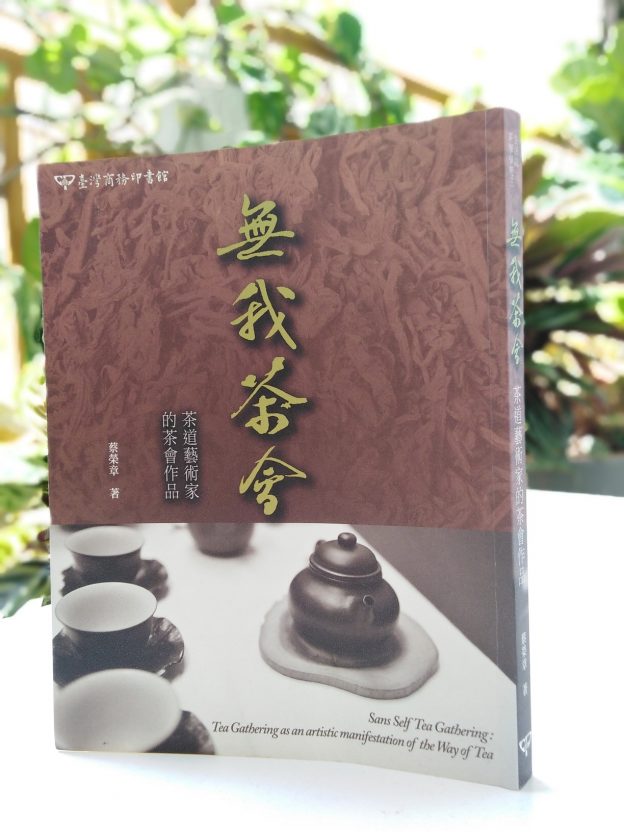
蔡榮章自序《無我茶會-茶道藝術家的茶會作品》

蔡榮章自序《無我茶會-茶道藝術家的茶會作品》

茶人在此作為狹義的解釋,指對茶文化頗有心得的喝茶人,而且有了大家可以體認到的建樹。茶道藝術家則是茶人中傾向於茶道藝術者。

茶道藝術家是比較重視茶道藝術內涵的人,他可以從泡茶過程、奉茶給品茗者的往來之間、大家品賞茶葉茶湯茶器間(以上這三項簡稱為〝泡茶〞),將茶道的藝術內涵表現得很好,甚至於可以藉著上述所說的〝泡茶〞,創作出自己的茶道藝術作品。

茶道藝術家除了利用〝泡茶〞來表達、創作、享用茶道之外,還可以藉用〝茶會〞的形式來完成上述所說的表達、創作與享用。藉用〝茶會〞可以是利用既有的茶會形式,也可以創作一個新的茶會形式。利用既有的茶會形式是側重於表達與享用,(表達之間當然還可以有〝泡茶〞方面的創作,)但若就茶會的範圍而言,想要有創作就必須創造出新的茶會形式。這就是現在我們要說的茶道藝術家的〝茶會〞作品。

我們經常看到茶友們設置各式各樣的泡茶席來展演自己的茶道藝術,如果他的泡茶表現得很好(包括了泡茶、奉茶、與品茗),而且很有創意,我們只能說他創作了一件泡茶作品,但不能說他創作了一件茶會作品,因為他使用的是既有的茶席式茶會。不論他是獨自一個茶席還是集合數個茶席。如果他組織了數個茶席,並在這些茶席間建構了一定的連鎖性關係,而且形成了一個整體性有機的視覺效果,這時我們才可以說〝他創作了一件茶會作品〞。

既然指的是茶會,那必然是一些人或一大群人的聚會,將這些人組織起來完成一件作品,勢必就像交響樂團或戲劇一般的藝術形態,只是它要表現的是茶道而已。

回顧一下歷來的茶會作品,最早的可以舉出曲水茶宴,不知道是誰創作的,只知道在中國晉代的書法大家王羲之他們就已經玩得很好了〝曲水流觴〞,唐代呂溫等一群文人因為不諳飲酒,相約在曲水流觴時以茶代酒而產生了曲水茶宴,現今各地茶界都還不斷進行著。接下來要舉出英國下午茶,也說不清楚是誰創作的,有人推給維多利亞女皇Queen Victoria(1819-1901)的女侍臣Anna Maria Russell, Duchess of Bedford(1783-1857)。這種喝茶時間、環境、茶具、茶法、茶點等習慣流傳至今,還在各地大行其道。第三個例子是日本的榻榻米茶會,這是時當中國明代,由日本茶道先驅者村田珠光、武野紹鷗、千利休等人創建的茶會方式,至今仍然被應用,而且被視為日本茶道的代表形式。

第四第五個例子是當代的無我茶會與茶湯作品欣賞會,無我茶會由筆者于1990年在臺灣陸羽茶藝中心創作,茶湯作品欣賞會由筆者于2010年在中國漳州天福茶學院(即今漳州科技學院)茶文化系創建。這兩種茶會形式尚未經過歷史性的考驗,但實施這些年來,無我茶會已在多個國家與地區持續性應用,茶湯作品欣賞會歷史尚淺,但從茶道藝術家聯合發表茶道藝術作品的角度來看,它是有趣又流暢的一種方式。無我茶會Sans Self Tea Gathering是表現無之境界的一種茶會形式,茶湯作品欣賞會是展現茶道藝術(尤其是最終的茶湯作品)的一種茶會形式。

蔡榮章

2012.8.22於漳州科技学院茶文化系

(2724)

陆羽茶道教室的经营模式-20130925周三小方块-蔡荣章

陆羽茶道教室的经营模式

蔡荣章

20130925周三小方块WEDNESDAY TEA CORNER

台北陆羽茶艺中心的茶道教室1981年1月4日开始第一个班别“茶艺讲座”的上课,这个阶段的上课是免费的,包括上课使用的茶叶、茶具与非泡茶课时每人的盖碗茶(泡茶课时已经有茶喝了)。但必须繳交新台币500元的保证金,8次课上完,泡茶考试与学科考试及格取得结业证书后退回保证金。缺课时可以在以后任何一期补上所缺的那次课,考试不及格时也可以在以后任何一期的同样考试时补考,不必再繳费用,补完课、补完试,依旧发给原期的结业证书并行退费。

除了基础班的茶艺讲座,后续开设的班别亦复如此。为执行上完课才可毕业的规定,每次上课必须签到,缺席的那次必然是空白,等补课时方行补签。

保证金的收费方式一直维持到1986年,为求茶文化教育的独立发展,改变成收费的制度。开始是将保证金的500变成收费的500,然后逐渐调高,从800到1000,从1000到1200、2000元不等,依课程所需的成本而定。收费的制度下,依然是上完全部学时并通过考试才发证,补课补考依然不另行收费。但是这样的收费标准,直到目前仍然无法支付包括房租在内的所有成本,除非班别密集得天天午晚皆是,每班的学员数都能够在30以上。

陆羽茶艺中心之所以能够采取这种几近公益式的教学方式,是因为它另有茶具开发部门,生产的茶具透过关系企业天仁茗茶与天福茗茶的销售网向外销售。“陆羽茶艺”品牌的茶具支持着教学,教学支持着茶具的研发(包括知识的与形象的),但这种做法要依赖经营者对茶文化的支持、相信茶文化与企业的永续经营是相互链接的,而且拥有经济支撑项目的营利能力。还得告诉学员,让有心办好茶学教育的单位能够赚钱,我们才能够享受更好的品茗氛围。陆羽茶道教室至今仍然处于需要扶持的状况,茶文化的私塾教育要能健康发展,学习费用还得提高,大家享受茶汤与茶道艺术(不只是茶叶商品)的需求还待大大醒觉。

1996年4月13日为期一年的师资班开课后,上完全部课程后才能结业的办法改成了:出席率达到80%以上(长年上课要一次不缺是不容易的)。补课的规定依旧,虽然必须等到一年后(尚无法并排开两个师资班)。可以补足80%的出席率,也可以补满全部课时。

陆羽茶道教室为了可以贯彻泡好茶的理念,制定了两个非得把茶泡好的制度与课程:

a. 从1983年起每年举办1-2届的泡茶师检定考试。检测的办法是在各类茶中抽取三样,依指定的茶具与供茶需求(如泡几道、泡给几个人喝),在40分钟内把茶泡出。如果能将茶汤泡出一定标准,且有80%以上的稳定度,就可通过术科考试,再通过学科考试(制茶、识茶、泡茶、茶具、茶史等方面的知识),就可以取得泡茶师证书。这个泡茶师检定考试的制度,除引导大家重视泡茶、重视茶汤外,也培养一些能够泡好茶的茶文化工作者、在茶事活动上有批精炼的先锋部队。

b. 除了1982年12月开设的泡茶讲座外,复于1999年10月25日起开设了“泡茶研习班”,利用“车轮式泡茶练习法”,一组五六位学员轮番上阵,第一位就坐后“置茶”与泡第一道,第二位泡第二道,第三位泡第三道,—-第五位泡第五道并去渣清具。每道茶冲泡之前都将茶壶传阅,每人看淸壶内的茶况,记录下自己所判断的“浸泡时间”。等茶泡好,大家品赏过茶汤,老师做出标准浸泡时间的判断(茶汤浓度标准时则依原冲泡时间,不标准时则提出标准时间)。每人算出自己的误差值(秒数),五道以后再计算总误差。就这样一次又一次地练习,以不同的茶叶与茶具为题,求得误差值的减少。这种泡茶练习除对茶况的认知外,必须关注置茶量、水温、前数泡的太浓或太淡、与前泡“间隔时间”的长短、茶壶出水的速度等等,是学习掌握茶汤浓度很有效的办法。

上面不厌其烦地介绍陆羽茶道教室在“学茶者必须认真且付出代价的学习” 、“必须具备泡好茶能力”的理念下所做的努力,也说明一个茶道教室,不论是学校体系还是民间的单位,有了思想与目标的指引,它的课程体系才容易显得有个性与富生命力。


  (1934)

無我茶會Sans Self Tea Gathering (Wu-Wo Tea Ceremony)-Chapter 14 Presenter’s Script for Sans Self Tea Gathering-蔡荣章Rong-tsang Tsai

《無我茶會Sans Self Tea Gathering (Wu-Wo Tea Ceremony)180條》

蔡荣章著Author:Rong-tsang Tsai

ISBN 978-957-9690-08-9,“无我茶会Sans Self Tea Gathering(Wu-Wo Tea Ceremony) 180” ,First edition: 1999.9, Second edition: 2010.9.《无我茶会180条》,1999.9第一版,2010.9第二版.台北陆羽茶艺股份有限公司.2012.05.20修订版.-English Translator : Katherine Yip,英语翻译:叶德明.

Chapter 14     Presenter’s Script for Sans Self Tea Gathering

A Sans Self Tea Gathering requires neither an event director nor master of ceremonies. However, the Organizer may assign a presenter to brief observers about the procedure and the meaning behind this unique form of tea gathering, if it is held in public. Such arrangement helps promote Sans Self Tea Gathering; it facilitates understanding of the concept, which is not to be confused with event facilitation.

Presenter’s Script for Sans Self Tea Gathering

Steps

Subject

Talking Points

1.Placing of number plates

a. Event

report

a. Ladies and gentlemen, we will be hosting a Sans Self Tea Gathering at __________ (time).

Please join us. During the tea gathering, our fellow brewers will be offering tea to you.

b. What is

Sans Self Tea Gathering

b. Participants of Sans Self Tea Gathering bring along their own tea wares. Seated in a circle or loop, they serve tea to fellow tea drinkers; this way, each participant enjoys tea brewed by different persons. It is essentially a form of tea gathering where everyone brews, serves and drinks tea.

 c.On-site happening

c. Seat number plates are being placed. Participants are seated in a circle or loop. Later on, they will take their places according to the numbers they have drawn. This realizes the first principle of Sans Self Tea Gathering, namely “there is no hierarchical differentiation.”

___(number) participants are attending this tea gathering; therefore, the number plates will be arranged in __(number) circles or loops.

d.Engaging the crowd

d. Ladies and gentlemen, today, each participant will be brewing four cups of tea, two of which will be served to you, our dear guests. Please stay with us. You will get to enjoy different types of tea (including those from Japan, South Korea, China ……).

e.Introducing the main and co-organizers

e. This Sans Self Tea Gathering, entitled  _________(name of tea gathering),  is held in conjunction with the _______ (occasion). It is organized by (the International Sans Self Tea Gathering Promotion Association) (and ____), and co-organized by _____. The Organizers wish to express their gratitude to the parties and individuals who have lent us their assistance and support.

2.Signing in

a. Drawing lots

a. Ladies and gentlemen, as you can see, the participants are arriving. Seats are determined by random drawing; no one knows who will be next to them until they are seated. This embodies the spirit of the tea gathering whereby we accept things the way they are – there is no hierarchical differentiation.

b.Participating parties

b. Participating in today’s ____ (name of tea gathering) Sans Self Tea Gathering are (all) fellow tea drinkers from ____ (I can see participants (from Japan) coming in….) .

c. Taking the seats

c. Participants are now taking their places according to the drawn numbers; some of them are already taking out their tea ware.

d. Tea Utensils

d. Ladies and gentlemen, take a look at these tea wares, how they are wrapped and being carried about. Tea ware for Sans Self Tea Gathering should be kept simple. Hot water is stored in the participants’ thermal flasks. There are different kinds of tea ware, too, including those for (matcha). Participants are free to make their choices of tea ware and brewing methods, thus realizing the second principle of Sans Self Tea Gathering: that “there is no restriction as to the school or regional practice in brewing”

e.Tea ware appreciation and networking

e. When tea ware is laid, participants may proceed to appreciate others’ tea ware, and greet and talk to each other. This is what we called the “Tea Ware Appreciation and Networking” session. It is a good time for photos; once brewing begins, no photos are allowed. Participants may ask non-participants to take photos for them outside the circle.

If the owner is not around, or no permission is given, participants should not touch the tea ware of the others when they are appreciating it.

3.  TeaBrewing

a. When to brew tea

a. When the “Tea Ware Appreciation and Networking” session is about to end, participants will return to their seats and begin brewing. Timing is stated in the “Notification” distributed prior to the tea gathering. There is no event director or master of ceremonies at the venue; everyone follows the pre-determined schedule, just as the third principle of Sans Self Tea Gathering goes: “Everyone follows pre-agreed arrangement”. When there is no event direction at the tea gathering, people could focus on the beauty of collective rhythm. Today, I am here to explain to you what Sans Self Tea Gathering is all about. Imagine I was not here talking, the impression of the tea gathering would be much more graceful.

b. Venue clearing

b. When brewing begins, the area inside the circle or loop formation must be cleared so as not to compromise the integrity of the venue. Filming crews and photographers have to move out; if necessary, take a few snap shots and leave the area promptly.

c. Observing silence

c. No talking is allowed once brewing begins; everyone will concentrate on making tea. Participants offer tea to each other without verbal exchanges, such as  “thank you” and “have some tea, please” – a slight bow, and a smile, is enough. A peaceful and tranquil environment is conducive to an aesthetic experience and the bond between people, matters and space the tea gathering brings. This is another characteristic of Sans Self Tea Gathering, namely “Appreciating mutual-understanding and the beauty of collective rhythm”.

d. Ways of serving tea

d. Ladies and gentlemen, now you will see how tea is served. Each participant offers tea to the three fellow participants on his (left), and reserves the last cup. This way, tea is served in the same direction.  “Uni-directional flow of tea serving” is a rule of Sans Self Tea Gathering. When you serve tea to your left and receive tea from your right, you are “expecting no action of reciprocity”, which is one of the seven principles of Sans Self Tea Gathering.

e. Setting aside personal preferences

e. The four cups of tea a person drinks could be entirely different, because the choice of tealeaves is personal. Sans Self Tea Gathering wishes each person to accept and appreciate tea without letting personal preferences get in the way. Preference rules out things you don’t like, which could be something intrinsically wonderful. By rejecting, we could be depriving ourselves of the blessings in life. “Setting aside personal preferences” is the way of tea that Sans Self Tea Gathering advocates.

f. Getting better each time

f. Not all tea is masterfully brewed. There may be one or two cups that are downright bitter and astringent. When this is the case, we should ask ourselves: “Have I brewed a bad pot, too?” “Brewing a good pot” is basic. Bad brew is a disgrace to ourselves, disservice to the others, and yes, to the tea brewed. “Getting better each time” is one of the seven principles of Sans Self Tea Gathering.

g. Second cup

of tea/round of serving

g. The participants will be serving their second cup of tea to our guests. Today, you will be drinking various kinds of tea brewed by fellow tea drinkers from different places (Taiwan,…). This is indeed a gathering of friendship and goodwill. Hold on to the cup; this will be used for the fourth round of serving.

h. Third cup of tea/round of serving

h. The third cup of tea will be served with the tea pitcher; again, it will be served to the three persons on one’s left with a cup reserved for oneself.

i. Alternatives for the directional flow of tea serving

i.Tea can be served either to your left or to your right. Likewise, it is not a must to offer tea to your three immediate neighbours; alternative arrangements can be made. For example, one may be serving tea to the second, fourth and sixth fellow tea drinkers, or the first, third and fifth fellow tea drinkers next to him, on either side, as long as the arrangement is made clear in the Notification in advance.

j. A brief history of Sans Self Tea Gathering

j. Sans Self Tea Gathering was introduced in Taiwan in 1990. Today, it has won worldwide recognition. This unique form of tea gathering takes place in different countries, including China, Japan, Korea, Singapore, Malaysia, etc. They take turn hosting an international Sans Self Tea Gathering at given years. This year (next year), we will be having the __th International Sans Self Tea Gathering at _______(country/place) in _______(month).  You are all welcome to join us.

k. Fourth cup of tea/round of serving

k. The fourth cup is now ready. This is dedicated to all our guests. This time, it could be a different person serving you a different kind of tea. With the Way of Tea, we are encouraged to brew for others, even strangers. This practice is certainly upheld in a Sans Self Tea Gathering.

l. Cups used by the guests

l. Ladies and gentlemen, enjoy your tea. The participants will begin packing their tea ware shortly.  To avoid any inconvenience and to stay friendly to our environment, they will collect the cups they have distributed. (If the cups are given away as souvenirs, revise the script)

m. Embracing the ‘beauty of the void’

m. When the last brew has been taken, there will normally be a short session of music appreciation that demonstrates the ‘beauty of the void’ embraced during a Sans Self Tea Gathering. This is a time when participants relish the aftertaste, and refresh their memory on what has happened in the course of the gathering. The music comes on without any introduction and requires no applause. As the music fades away, participants begin collecting their tea ware and the tea gathering is coming to an end. (Revise the script if other forms of post-tea activities are arranged. Omit if no such activities are arranged.)

4. After-tea Procedures

a. Post-tea activities

a. (No explanation is required)

b. Wiping the cups

b. Before packing, wipe each used cup to avoid it being too messy when others come and collect their cups. This gesture is in line with the spirit of the Way of Tea, whereby we put others’ interests first. The tea ware will have to be washed when one is back at home.

c. Collecting the tea cups

c. After wiping the used cups, participants will proceed to collect their tea cups from other participants, (as well as tea cups from the guests, along the way). Silence is still observed.

d. Packing the tea ware

d. After the cups have been collected, pack tea ware properly.

e. Tea ware for travelling

e. Ladies and gentlemen, pay attention to these ‘travel’ tea ware used by the brewers. You may want to prepare a set similar to this, so you can enjoy tea when you are travelling or going out with your family. Note the way these items are packed: Tea cups must come with ‘cup covers’. Two of the cups are ‘hooked’ onto the teapot and bundled up with a wrapping cloth, while the other two cups are stacked with the tea pitcher and bundled up with another wrapping cloth. The idea is to proceed in a well-planned, systematic manner to the very end. There is this common saying: What has begun well must end well.

f. Service Counter

f. Ladies and gentlemen, (The Sans Self Tea Gathering Promotion Association) operates classes on the Way of Tea conducted by experienced instructors at different places. There are also classes on Sans Self Tea Gathering at fixed time and venues.  For more information, please proceed to our service counter.

g.Thank you

g. We would like to express our gratitude to ______ for providing us with ______ for the today’s Sans Self Tea Gathering. (Omit if not applicable)

h.The End

h. Ladies and gentlemen, we appreciate your feedback about this Sans Self Tea Gathering. Thank you for participating, and we look forward to brewing tea together next time.

i. Group photo

i. To commemorate this special occasion, we would like to invite all our guests to come together for a group photo.

This Sans Self Tea Gathering has come to an end. We would like to thank everyone for a wonderful time together. See you soon.


  (3504)

陆羽茶道教室的课程变迁图-20130911周三小方块-蔡荣章

陆羽茶道教室的课程变迁图

蔡荣章

20130911周三小方块WEDNESDAY TEA CORNER

首先将台北陆羽茶艺中心从1980年成立到2012年间,茶道教室所开设的各种课程统计如下:

a. 1980: 茶艺讲座

b. 1982: 壶艺讲座、评茶讲座、泡茶讲座(后改成“茶法与茶会讲座”)

c. 1988: 茶思想研讨

d. 1996: 师资研究班

e. 1999: 泡茶研习班

f. 2004: 评茶研习班

g. 2005: 茶席之花、四序茶会

h. 2007: 茶文艺讲座、无我茶会、香道

i. 2009: 日本茶道、專業英語、陆羽茶经

台北陆羽茶艺中心1980年10月1日开始营运后,同年12月就启动了茶道教室的工作。因为是茶文化复兴的初期,而且是非学校体系的教学,所以要从茶学基础开始,且是以泡茶、喝茶为主的综合性课程,当时称为“茶艺讲座”。初期课程分为八次,每次二小时。第一次是茶的制造,第二次是茶的识别,第三次是泡茶原理,第四次是泡茶演练,第五次是陶艺与茶艺,第六次是茶的历史与文化,第七次是茶艺观摩(即泡茶考试),第八次是笔试、研讨、与发证。后来在第六次后增加了无我茶会而变成九次课。

随着综合性课程之后开设的是分科教育:茶具跟在茶叶之后最先受到喝茶人的关注,市场行情一日千里,博物馆也争先举办古壶收藏展,“壶艺”之词不胫而走。于是“壶艺讲座”在1982年3月开始变成茶道教室的第二个招生班别。当时的讲座内容几乎80%倾向紫砂陶艺与紫砂壶,到了1996年师资研究班成立后,才将壶艺的应有面貌完整地呈现,也就是陶瓷兼顾、中西并重。

跟在壶艺讲座之后的分科教育是1982年5月开班的“评茶讲座”。这时茶行在台湾是五步一小家十步一大家,每个主要产茶区的茶比赛揭晓日都是万人空巷。茶叶已成待客最体面的饮料,大家急于了解茶叶品质的好坏,于是茶叶评鉴、感官审评变成了热门的话题。

1983年12月23日,陆羽泡茶师检定考试首次登场。在此之前陆羽茶道教室就一直强调泡好茶的重要性,买好壶、买好茶不都是为了泡好一壶茶来品饮?而且这时候的喝茶人开始意识到了茶道、茶艺术的存在。1982年12月,“泡茶讲座”(后改成“茶法与茶会讲座”)在茶道教室开始招生。这时是一期八次的时间全部拿来研究如何把茶泡好,而且每次都要在课堂上与老师一起练习。

刚才提到茶友们开始意识到茶道、茶艺术的存在,各种茶道课程也陆续展开,但在这茶文化复兴的起始阶段若没有走出正确的方向,等到大家都处在了错误的地方,扭转就费力了。1988年6月,收集了当时已显现分歧的观念与看法,开设了“茶思想研讨”班,从制茶、识茶、泡茶、茶器、茶史、茶道、应用、推广诸方面讲解与讨论。

泡茶师检定考试每年一至二届地举办着,几年下来就会聚集不少的泡茶师。泡茶师是茶道老师的摇篮,台湾茶文化从1980年发展到1996年,茶道老师在各地的社区大学、文化中心,以及个人的茶道教室都有所需求。于是“师资讲座” 在1996年4月针对已取得泡茶师证书的人开班了。这个课程不同于分科教育,是一年期长时间的培养,每周上课一次,每次3小时,全期40周,共计120小时。课程含盖了基础课的九次内容,而且以能讲授茶艺讲座的课程作为师资培养的目标。

陆羽茶道教室的基础与分科教育都是采取一周上课二次,每次二小时的模式,因为这是社会人士较易做到的进修方法。一个班别一个班别地修习,有一天就可以把各种茶学课程学完。学完基础与分科的课程之后,有些茶友还会要求进一步的学习,于是属于高级课程的“泡茶研习班”在泡茶讲座之后的1999年10月开始招生, 每次以“车轮式泡茶练习法”进行泡茶的磨练,希望把茶汤泡得精准、把茶道的艺术境界表现出来。另外一个高级班是“评茶研习班”,在评茶讲座之后的2004年5月开设,它的培养目标放在成就一位评茶员,不但要能稳定地为数种茶的品质排序,还要在泡得不标准的情况下判断茶叶的好坏。

无我茶会在1990年正式推出,1991年开始加入到“泡茶讲座”的课程内(这时的泡茶讲座也改成了“茶法与茶会讲座”)。2003年3月,北京陆羽茶艺中心成立,新开班的“茶艺讲座”就在台北原有的课程上另加了一次无我茶会,而变成是九次课的基础班,台北在2003年11月也跟进。2007年8月,由于无我茶会已发展到成熟的阶段,而且随后在9月开校的天福茶学院(后改名为漳州科技学院)就要在茶文化系上开设2学分的无我茶会课程,所以名为“无我茶会”的独立班别在台北开始招生。

为了主动促进茶文化的发展,陆羽茶道教室不断开设了许多茶学相关课程,诸如2005年3月开始的“茶席之花”,2005年9月开始的“四序茶会”,2007年5月开始的“茶文艺讲座”(藉茶画、茶书法、茶诗、篆刻等培养审美的能力,尤其是抽象艺术),2007年10月开始的“香道”(香气的欣赏与应用),2009年3月开始的“日本茶道”(日本的抹茶法与煎茶法),2009年7月开始的专业英语(以茶文化术语的英译为主),2009年10月开始的“陆羽茶经”(唐.陆羽《茶经》解读)。有些课程后来又增设了进阶班, 如茶席之花進阶班、无我茶会進阶班等。

为什么要关心台北陆羽茶道教室的课程变迁呢?因为该教室成立于茶文化复兴初期,到现在还继续进行着上述这些课程。到2013.08.14截止,最早的基础班“茶艺讲座”已办了458期,分科教育的泡茶讲座也办了123期,从它开设的班别与前后的顺序,我们可以理解茶文化教育,尤其是在民间发展的情形。


  (2472)

無我茶會Sans Self Tea Gathering (Wu-Wo Tea Ceremony)Chapter 12 Promoting Sans Self Tea Gatherings and its Meaning-蔡荣章Rong-tsang Tsai

《無我茶會Sans Self Tea Gathering (Wu-Wo Tea Ceremony)180條》

蔡荣章著Author:Rong-tsang Tsai

ISBN 978-957-9690-08-9,“无我茶会Sans Self Tea Gathering(Wu-Wo Tea Ceremony) 180” ,First edition: 1999.9, Second edition: 2010.9.《无我茶会180条》,1999.9第一版,2010.9第二版.台北陆羽茶艺股份有限公司.2012.05.20修订版.-English Translator : Katherine Yip,英语翻译:叶德明.

Chapter 12  Promoting Sans Self Tea Gatherings and its Meaning

156. How should we promote ‘Sans Self Tea Gathering’?

To promote Sans Self Tea Gathering, the Chinese International Sans Self Tea Gathering Promotion Association has engaged ‘Sans Self Tea Gathering Instructors’ and ‘Teachers of the Way of Tea’ to conduct classes and training at both permanent and ad hoc locations, while encouraging these teachers to introduce systematic ‘Classes on the Way of Tea’ at fixed venues. The curriculum covers not only Sans Self Tea Gathering but also other areas of the study of tea.

157. Incorporating Sans Self Tea Gathering into the curriculum of courses on the Way of Tea

Following the initial efforts in promoting Sans Self Tea Gathering, this unique form of tea gathering has been incorporated into the curriculum of various courses of the Way of Tea. Sans Self Tea Gatherings are organized the world over. 《Sans Self Tea Gathering: Tea Gathering as an artistic manifestation of the Way of Tea》is an elementary textbook for the teaching of Sans Self Tea Gathering.

158. Setting up ‘Sans Self Tea Gathering’ Community Centre

We wish that ‘Sans Self Tea Gathering’ Community Centre can be set up at different places for fellow tea drinkers to attend regularly-held Tea Gatherings. A weekly Sans Self Tea Gathering could be scheduled, and participants may get acquainted with each other before and after the tea gathering. Practices can be held regularly at the Community Centre when it is not used for hosting Sans Self Tea Gatherings. Similarly, the venue can be used for imparting knowledge about tea.

159. The importance of integrity to Sans Self Tea Gathering

The tea ware for Sans Self Tea Gathering can be of any design, which makes it simple for a beginner to put together a tea set for the occasion.  Meanwhile, a complete set of user-friendly tea ware not only boosts one’s interest but also the desire to acquire the necessary items when one has built up his confidence.

It is fine to prepare ten to twenty sets of spare tea ware for beginners for practice purposes, but the students must be asked to acquire their own set when they have reached a certain stage in course of practice.

160. Flexibility and Reach of Sans Self Tea Gathering

Sans Self Tea Gathering is a very flexible form of gathering. It encourages floor seating, thus eliminating the need of tables and chairs. Participants bring along their own tea ware, seating mat and boiled hot water. As such, it is possible to have the tea gatherings both indoors and outdoors.

For Sans Self Tea Gathering, there is no need of any event conductor or leader.  There is also practically no limit to the number of participants — it does not matter if some participants are blocked by buildings or knolls on site, or they spread across miles. Meanwhile, participants can offer tea to onlookers during a Sans Self Tea Gathering if this is intended for the event. For example, if there are 100 participants, and each brews four cups of tea for the onlookers, 400 onlookers will be served; and if each participant brews two rounds of four cups each, they will be brewing a total of 800 cups, which means that 800 onlookers will be served.  If the Organizer has arranged for a presenter, he will brief a substantial number of onlookers the nature of ‘Sans Self Tea Gathering’ and ‘the Way of Tea’ as the event progresses. The reach and spread that can be achieved by a Sans Self Tea Gathering needs no further illustration.

161. How could we highlight the style and characteristics of Sans Self Tea Gathering?

It is important to emphasize the characteristics of a Sans Self Tea Gathering as soon as you begin promoting it.  Make it clear that no one should speak once brewing starts, and there is no arrangement for guests to make speeches, etc. Otherwise, the special style of Sans Self Tea Gathering will be overlooked and undermined. If the Organizer fails to insist on the standard practice right from the start – for fear of the gathering becoming too serious – and allows fellow tea drinkers to engage in conversation while sipping tea and taking snacks, participants will think that there is no difference between Sans Self Tea Gathering and ordinary tea gathering, with the only exception being the loop formation and floor seating. This way, the unique characteristics of Sans Self Tea Gathering will become oblivious in due course.


To promote Sans Self Tea Gathering the way it should be, a clear understanding of the practice and meaning is essential. This is the only way to stay true to the format and convince participants and partners.  For example, if a co-organizer requests to have the person-in-charge of their company deliver a speech, explain to him that this is inappropriate. Or, the musician invited for the post-tea performance may think that a five-minute performance is too short and ask for a longer introduction, explain clearly the reason behind this arrangement. Such clarification is important to the promotion of Sans Self Tea Gathering.

162. Why is there no arrangement for VIP seating and speech of attending officials?

There is no special seating arrangement – in the midst, outside or inside the loop formation – for local celebrities or attending officials.  We welcome these guests to draw lots for seating and brewing as other participants. This is every way as appropriate as having these guests seated ‘apart from the rest’. If they are unable to brew with the others but like to learn more about or advocate such tea gatherings, invite them to stay outside of the loop formation and observe or be served tea like the other onlookers.

Likewise, speech-giving by the attending official would clash with the unique style of Sans Self Tea Gathering. Instead, invite the official to brew and serve tea along with the participants. This could be more impactful.  Our experience shows that the official would agree to substitute speech-giving with tea-brewing, provided we explain the procedure and meaning of Sans Self Tea Gathering in details. If he wants to give special  messages during the occasion, the Organizer may suggest to have him do so during the group photo session, or after the tea gathering, or during ‘post event activities’.

163. Why don’t we have background music during a Sans Self Tea Gathering

No music is played or being performed throughout a Sans Self Tea Gathering –  from the time when registration begins to packing up – because it may weaken the ‘flavour’ of such a unique tea gathering and does not serve the purpose of music appreciation.  Some people may think that background music can contribute to the atmosphere; the reality is, music can be a source of distraction; this would be worse if the songs are familiar to us. Without music, we will channel all our attention to tea, brewing, interpersonal relationship and the spirit of the tea gathering. This way, the style of Sans Self Tea Gathering will become more prominent, and the impact of the Way of Tea on everyone present will be stronger.


Music can be introduced after the last cup of tea to accentuate the ‘beauty of the void’. At this juncture, everyone at the tea gathering can sit back and listen to the music, while relishing the aftertaste of the tea. If more time for music appreciation is preferred, the Organizer may allocate a longer period for music performance as part of the ‘post-event activities’.

164.  ‘Post-tea activities’ would best be carried out by participants

Organizing a Sans Self Tea Gatherings should be hassle-free.  It is important to keep administration to a minimum; there are no specially-appointed organizing team members – tasks are shared by fellow tea drinkers (with the exception of special tasks such as video filming).  By the same token, it would be best if participants are responsible for post-tea activities. They may stay in their respective places, or move slightly to the side where the musical instrument is, and sing or play a piece of music. This is the easiest way to fulfil the intention of illustrating the ‘beauty of the void’ because the performers are also participants.

165. Organizing a promotional Sans Self Tea Gathering

Any quiet place will be good for a Sans Self Tea Gathering among friends. However, if a Sans Self Tea Gathering is to be organized to create awareness among members of the public, it is advisable to find a popular spot with a lot of traffic. It is essential to have a presenter at promotional Sans Self Tea Gathering; otherwise, onlookers would be at a loss. Meanwhile, it would be more effective to get onlookers warm up to the idea of Sans Self Tea Gathering if they will be offered tea.

To enhance the effect of a Sans Self Tea Gathering where the public will be briefed, prepare a set of written information introducing this form of gathering, including places where those interested can take relevant lessons. It is even better if the Organizer can include a ‘trial’ tea gathering at the end of the tea gathering. Find out how many people are interested, and assign one participant as mentor to each person interested. These mentors would lend their sets of tea ware to the newcomers. As the presenter explains the procedure, the newcomers will practise with the help of their mentors by the side. This is ideal as the newcomers can put into practice – with readily-available tea ware –what they saw and heard a while ago. Pre-event preparation would be necessary. The Organizer should remind participants to bring one extra flask of hot water (or have hot water refill on site), an additional cup (or have paper cups for everyone), and put more tealeaves in the teapot (the same tealeaves can be used for brewing during this trial round).

166. Application of Sans Self Tea Gathering for other occasions

Sans Self Tea Gathering is an occasion when tea is used as a means to get together. It can also be adopted in the following ways:

a. As a teaching method for ‘tea identification’ in the study of the Way of  Tea. For example, the teacher will divide students into groups of four and ask each one in a group to bring along a certain kind of tea. Adopting the format the Sans Self Tea Gathering, each member of a group will serve the tea brewed with tealeaves he has brought along. As the end, each member of a group would have sampled and learned about the characteristic of each of the four teas.

b. As a form of practice for brewing in the study of the Way of Tea.  For example, the teacher will bring along, or ask the students to bring along a particular tea, with which everyone will practice brewing according to the format of Sans Self Tea Gathering. This way, each student will be able to drink four cups of the same kind of tea (assuming each serves four cups) and assess if each cup is well brewed or poorly brewed.

c. As a form of engagement or wedding ceremony.  The time for ‘Tea Ware Appreciation and Networking’ session can be used for the engagement or wedding ceremony, after which the newly-wed couple can brew with fellow tea drinkers.  The bride and groom serve tea to each other’s parents; while other participants serve tea according to the agreed conditions of Sans Self Tea Gathering (The seats of the bride and groom are considered those of non-brewers). ‘Serving tea to onlookers’ is effectively serving tea to guests attending the ceremony.  Post-tea activities could be singing by friends and relatives, and the tea gathering may or may not be followed by a wedding banquet.  What’s being advocated by Sans Self Tea Gathering can be applied to marriage, and adopting the tea gathering as a form of wedding ceremony is both symbolic and appropriate.

d. The tea gathering can also be held in memory of a person.  For this purpose, The time for ‘Tea Ware Appreciation and Networking’ session can be used for ‘paying tribute to a person ’, followed by participants offering their first cup of tea to the subject of tribute. After this, tea could be offered to fellow tea drinkers or other participants of the memorial gathering. Post-tea activities could be chanting or group singing of remembrance. Such arrangement enables the subject of tribute to take the same cup of tea with everyone present – and ‘drinking literally from the same cup’ makes the occasion so much more touching and memorable.

167. Sans Self Tea Gathering’ in English, Japanese and Korean

Sans Self Tea Gathering is known as 「無我茶會」in Chinese, Japanese and Korean, as  the Chinese-, Japanese- and Korean-speaking  audiences can readily recognized the term. In English, this unique form of tea gathering was first translated as Anatman Tea Convention, followed by Wu-wo Tea Ceremony. In spring 2012, we decided to rephrase it to ‘Sans Self Tea Gathering’, given the fact that the tea gathering celebrates the realization of , literally ‘the absence of’ or ‘void’. ‘無我’ should be understood as ‘I who understand the idea of nothingness’. Sans, an archaic French word meaning ‘without’, has been made popular by some of the greatest literary works through the ages, including William Shakespeare’s comedy “As You Like It”. To call it a tea gathering, instead of a tea ceremony, is to better reflect its nature as the founders see it.

168. What is the International ‘Sans Self Tea Gathering’ Organization?

Tea drinkers in different countries and regions have undertaken to promote Sans Self Tea Gathering. They take turn to host large scale ‘International Sans Self Tea Gathering’ at regular intervals at agreed locations. The Organizer of an international Sans Self Tea Gathering is the Sans Self Tea Gathering Organization of the country or region. The Leaders’ Convention of an International Sans Self Tea Gathering is the occasion when member organizations of the International Sans Self Tea Gathering Organization meet up to discuss issues pertaining to the promotion of Sans Self Teat Gathering and the host of the upcoming event.

169. Is there a need of a standardized flag and anthem for the Sans Self Tea Gathering?

We had introduced a flag and an anthem for Sans Self Tea Gathering when it was first launched. These are still used in certain countries and regions. However, they have not been stated as the standardized flag and anthem, because we do not regard this an important issue.

170. What is the meaning behind ‘Sans Self Tea Gathering’ ?

‘Sans Self Tea Gathering’ is a way of thinking and a form of tea gathering pertaining to the study of tea. ‘Sans Self’ should be understood as ‘I who understand the idea of nothingness’. Only in the state of ‘nothingness’ can ‘something’ be born. One can hardly attain wellbeing if one’s mind is preoccupied with wealth, fame, status, beauty and endless chores. The state of nothingness is neither a state of ignorance nor death.  An analogy of such a state will be the colourless light which is effectively a convergence of different colours. The colours in our life are distilled by ‘tea’; this enables us to enter into a state with an ‘absence of colours’.

171. Sans Self Tea Gathering for one to thousands and millions of participants

Sans Self Tea Gathering may have begun with one person.  When a person brews and enjoys tea with no disturbance or distraction, it is more likely that he can savour the taste of tea, understand the brewing process, contemplate how a brewer’s state of mind affects the taste of tea, calm himself and come face to face with his true self. In fact, we encourage everyone to take tea alone, and look upon this as the basis of the Way of Tea.

When you have a clear idea of what it is like having tea on your own, you may invite your closest friend and ‘have both drinking tea alone’ –  the two of you will brew tea on your own, serve each other tea, all in silence. A deeper understanding between you two can be achieved in the course of brewing, serving and drinking tea. As distraction is kept to the minimum, you will understand each other better. You will be able to experience more and learn the way to staying quiet in others’ presence. When you have achieved an understanding of a state of nothingness in the presence of another person, you may proceed to invite a small group of three to five good friends, and introduce them to this way of having tea. Practise the Way of Tea together in the spirit of ‘emptiness and solitude’. Feel the tranquility and freedom in the midst of a larger group. This way, the number of people for a Sans Self Tea Gathering can reach thousands and millions.


  (2378)

不再迷思紫砂壶的运用与保养-20130826周一喝茶慢-许玉莲

不再迷思紫砂壶的运用与保养

许玉莲

20130826周一喝茶慢MONDAY SLOW TEA

(一)泡茶的壶最美

喜欢那些紫砂一厂壶,双手握着把玩特别舒服,触觉肌理有柔软感,不是硬梆梆的。十多年前我们收了一支提壁壶,用来冲泡普洱,普洱是自己调配的,以渥堆普洱饼茶做基料,加少许下关青沱茶,投茶进壶倒热水,马上感觉到壶体袅袅冒热气,一下一下仿如做吐纳练功,看着它我们自然而然安静地等待茶浸泡。

伴着我们一起泡茶喝茶约半年后,最初未用时貌似粗糙石头的提壁壶,已悄然变得像块玉那么温润的样子了,它壶体的颗粒因有亮泽而均匀凸现,水色流丽,褐泥中常夹杂着飘忽不定的一抹银紫色,轻轻地触动了我们心灵特别柔软的那一瓣,叫做美。

(二)和壶做朋友

我们一直使用一支一厂的掇球壶冲泡熟火乌龙茶,是红泥壶,但隐隐然乏黄色,泡茶久了,色泽变为更深沉的红,润亮。它烧结程度很高,传热也快,我们喜欢它泡出的茶汤风格:香味清醇高扬。

我们一直说:不要为养壶而买壶、为养壶而泡茶。一支壶只收藏着放在那边,没有人给它茶喝,没有人抚摸它、珍惜它,它永远就是一个物件而已。即使有用到它来泡茶,但中心点没有放在喝茶,那支茶壶也是不会有生命力和吸引力的。

茶壶是为喝茶而生的,把茶壶带回家后,我们要关心一下各茶壶的材质、烧造工艺、造型等身世来历,花些时间和它们做朋友,我们就会发现每一个壶都有适合它性质的茶。

(三)新紫砂壶使用方法

一.用清水将壶身内外冲洗干净,以一块干净软布协助清理。洗涤好了即可开始泡茶用。

二.有些壶需要浸洗的话,将热开水倒入一容器,放一点茶叶入水,把壶和壶盖分开泡进水里,几个小时后把壶取出,用清水沖洗干净。如壶内有些细沙,彻底洗刷干净即可泡茶。

三.不必使用其他材料如米粥、豆腐、甘蔗等与新壶和水一起煮。不必把新壶拿去煮或蒸,不可用洗洁精清洗砂壶。

四.如新壶身上有肉眼可见的蜡、油、污迹、泥块、茶垢等状况,或嗅闻到奇怪异味,不可用于泡茶品茶。

(四)善待砂壶的心思

一.实实在在的使用茶壶泡茶来品赏。不要把茶壶当傻瓜,以为它不晓得冷暖,天天拿它去烧煮或泡在水里,有时甚至泡馊了也没放在心上。

二.泡茶时不必一直用热水往壶的头上浇淋、不必边淋水边用毛刷子刷壶身、不必用布不断地推搓壶身。

三.每次泡饮完毕,要将茶渣清除干净,把茶壶用清水冲洗,再用干净布擦拭壶外,打开盖子放在卫生处让它晾干。

四.每一次让壶彻底干燥后,才再使用第二次。

五.提拿茶壶时要小心谨慎,一手扶把一手托底,放时要轻声轻气。数人观赏茶壶时,茶壶不要放在人手上传来传去,桌上铺一块软布,把茶壶置放布上,郑重把壶请过来。

  (2841)

2013.6.27 漳州科技学院茶文化系举办第47届泡茶师颁证典礼暨第一届茶汤作品欣赏会

2013.6.27   漳州科技学院茶文化系举办第47届泡茶师颁证典礼暨第一届茶汤作品欣赏会。

现代茶道思想茶汤欣赏会2013.6.27于漳州科技学院茶文化系茶道展演厅

是次属于47届新泡茶师-年轻茶道艺术家的联合茶汤作品欣赏会,掀开茶文化教学新一页,此是不依赖其他艺术衬托,直指纯茶道核心价值的茶汤作品发表会,对年轻茶道艺术家们将来不管从事茶产业或茶文化研究方面等工作,提出了新方向与重要启示。


  (1695)

無我茶會Sans Self Tea Gathering-Chapter 7- Taking your seat and Tea ware Appreciation -蔡荣章Rong-tsang Tsai

《無我茶會Sans Self Tea Gathering 180條》

蔡荣章著Author:Rong-tsang Tsai

ISBN 978-957-9690-08-9,“无我茶会Sans Self Tea Gathering 180” ,First edition: 1999.9, Second edition: 2010.9.《无我茶会180条》,1999.9第一版,2010.9第二版.台北陆羽茶艺股份有限公司.2012.05.20修订版.-English Translator : Katherine Yip,英语翻译:叶德明.

Chapter 7 Taking your seat and Tea ware Appreciation

75. How could we ensure seating mats are neatly aligned?

Each number plate is placed in such a way to mark the centre point of the front edge of the seating mat; as such, align your ‘seating mat’ (not the cloth liner) accordingly with the number plate, and the seating arrangement will be neat and as planned when everybody is seated.

76. How should we handle the number plate?

For plate made of cardboard, put it into the carrying bag once the seating mat is laid; this way, the seating area will look tidy. If the number is indicated by way of a souvenir, place it in an appropriate position for display alongside the tea ware. Pack it together with the tea ware when the event is over.

The number lots obtained at the registration counter should also be kept in the bag to keep the place tidy.

77. Should the cups be placed right side up or upside down?

Out of hygiene consideration, tea cups will be placed upside down when they are being laid out on the tea tray, while random drawing is going on and seats are being taken. In this case, turn the cups right side up when brewing begins. Having said that, tea cups can be placed right side up if they look a lot more appealing this way, and the venue is free from sand, draught and other hygiene concerns.

78.  If tea is to be served to onlookers, should the extra cups be displayed?

Generally, the organizer will distribute cups for onlooking guests to the participants when they sign in at the registration counter, if the decision was made beforehand. Participants will keep these extra cups in their carrying bags until the tea infusion for the onlookers is brewed and it is time for serving; there is no need to display these extra cups. There are three reasons for this arrangement: first, to avoid a cluttered brewing area and keep the place neat and visually appealing; second, for security reason, to avoid the cups being overturned or blown away by strong wind; third, to add an element of unexpectedness – onlookers would be pleasantly surprised as cups were hidden from sight and they have no clue that they will be served!

79. Should the snack be displayed if the tea gathering calls for ‘tea time snacks’?

If the tea gathering calls for ‘tea time snacks’, details including when it is to be served will be specified in the ‘Notification’.  Bring along the snack accordingly.  Do not take it out when tea ware is laid for hygiene reason. When the time comes, take it out and distribute.

80.  For Sans Self Tea Gathering taking place in the evening, where should the light be placed?

Participants would have to bring along their own lighting devices for an evening tea gathering. The light should reach the tip of the spout or the inside of the tea bowl, besides contributing to an aesthetically appealing impression, and not getting in the way of water pouring, tea distributing and serving, etc.

Pay attention to safety if candles or oil lamps are used. Make sure the tea towel, tea cloth and seating mat, etc, will be out of the lamp’s way when there is a draught to prevent burning.  Should gas stove be used, make sure there is no leakage when it is being transported.

81. What should we do if there is strong wind outdoors?

For an outdoor Sans Self Tea Gathering, the items prone to toppling over or being lifted in a gale will be the tea cloth, seating mat, cloth liner and tall, slender thermal flask. Under such circumstances, lay the thermal flask on its side on the windward end of the tea cloth. Use the carrying bag to hold the seating mat and cloth liner down. Other heavier personal items, pebbles and stones around can double up as weight.

82. What should we do if the venue is rain-soaked?

Bring along a cloth liner if it rained before you leave home for the tea gathering. If you are already on the way and there is no chance for you to get the cloth liner, be resourceful. If the tea gathering takes place at the countryside, gather some grass and leaves and lay them on the ground, provided this does not spoil the scenery; if brewing is to take place on concrete or stone-paved surface, just sweep away the water on small area, and avoid large puddles. One should be adaptive and prepared to solve problems.

83. The issue with insects for outdoor tea gatherings.

For outdoor event, insects are unavoidable gatecrashers. They will creep up your seating mat or make themselves at home on your tea tray. This issue was raised after the 5th International Sans Self Tea Gathering had taken place on a meadow at the Yunv Peak of the Wuyi Mountain. Some participants complained that insects had popped into their cups. Initially, the organizer responded by saying what seemed to be the obvious: we could spray the place with insecticide a few days before the event. There was a pause, then someone objected: What are insects compared to insecticide? Is insecticide any better than a few insects? Soon, the insects had garnered a lot of support – ‘If the mantis makes its way to my tea tray, I will bring it along to serve tea and let it leave slowly after I have returned to my seat’; ‘If a bug lands in my cup, I will avoid it when I drink, leave some tea at the bottom of the cup with the bug, and discard it.’

Towards the end, it seemed that no one objected to insects participating in the Sans Self Tea Gathering – instead, everyone was talking about the interesting experience they had with these ‘fellow participants’!

84. ‘Tea ware Appreciation and Networking’ session: When to begin, when to end and what are the alternatives?

This is the very first activity during a Sans Self Tea Gathering. When the tea ware is laid, participants could meet and greet fellow tea drinkers and appreciate their tea ware.  This is also the time for making new acquaintances. Normally, there is no definitive time for the beginning of this session.

The ‘beginning of tea brewing’, however, is a key moment. This should be clearly understood by each participant. This also marks the end of the ‘tea ware appreciation and networking’ session. When the time comes, everyone will have to return to the respective seats and begin brewing.

The ‘tea ware appreciation and networking’ session may not matter as much if it is a tea gathering among old acquaintances and friends. As such, it is appropriate to have a few minutes when everyone settle down and sit in quietude before brewing begins. Upon confirming that all participants are present, and tea ware laid, the organizer may suggest that everyone be seated and wait in silence, until the time comes for brewing. At this point, open the thermal flask as a cue that it is time to brew.

The ‘tea ware appreciation and networking’ session is a part of the Sans Self Tea Gathering. Background music is not recommended, as it may distract participants from seriously appreciating the tea ware and getting to know each other; worst still, this may give the wrong signal that preparation is still under way. Should there be briefing arranged for onlookers, it important to tell them what the participants are doing, from the time number plates are placed.

If an opening ceremony is required, have it at the place next to the venue for the tea gathering.  Let all participants sign in and lay the tea ware as usual.  Direct them to the place where the opening ceremony is to take place. When the ceremony is over, go back to the venue for the tea gathering and begin with the ‘tea ware appreciation and networking’ session. This is better than incorporating the opening ceremony into the ‘tea ware appreciation and networking’ session as the integrity of the event flow will be preserved. Likewise, it is better than having the ceremony before the participants laying out the tea ware, which may spoil the atmosphere of the tea gathering.

85. Etiquette during ‘tea ware appreciation’

All participants are required to bring along their own tea ware, which makes Sans Self Tea Gathering a great occasion to showcase individual tea ware; this is especially true for international gatherings whereby participants from different countries get together. Furthermore, the choice of tea ware speaks volume of an individual, which helps facilitate understanding among fellow tea drinkers.

Avoid touching or picking up the tea ware during the appreciation session. Firstly, it is for hygiene reason; secondly, it will also avoid breakage by accident. The exception is when the owner is at his place, and show you the tea pot himself or indicate that you can take up the tea pot to have a closer look.

Walk about gently to avoid kicking up dust and spreading it around, and take care not to step on or kick over the tea ware inadvertently.  Do not disturb participants who are busy laying out their tea ware to avoid delay. Try not to spend too long talking to one person, as he will need time to appreciate tea ware and mingle around. Keep track of your time, and make sure you have enough time to get back to your place before the ‘tea ware appreciation and networking’ session ends.

86. How to optimize the impact of networking?

The best time to build friendship is during the ‘tea ware appreciation’ session and the ‘post-event activities’.  Arrange some ‘networking coordinators’ to assist participants reaching out to fellow tea drinkers. If there are members of a few associations present at a particular Sans Self Tea Gathering, the ‘networking coordinators’ must be familiar with the members of these associations.

87. How to distribute ‘Backgrounder’ to members of the public at the venue

Normally, a Sans Self Tea Gathering taking place at a public venue is intended to be promotional in nature – besides having presenters briefing the public about the procedure and spirit of Sans Self Tea Gathering, ‘backgrounders’ can be distributed. There are three ways to distribute these: a) set up a service counter at the registration area and put up a sign that backgrounder would be given out upon request. Attend to requests throughout the entire tea gathering. b) Arrange to helpers walking about at the venue and giving backgrounders out to interested onlookers. c) Distribute backgrounders to tea-brewing participants beforehand, and let the participants distribute the backgrounders to the onlookers while they are explaining to them afterwards.


  (1967)

喝茶者的礼节十八戒-许玉莲

喝茶者的礼节十八戒

许玉莲

2013.2月刊发表于中国海峡茶道杂志每月专栏

喝茶者可以歪着身子斜躺在椅背,看泡茶者泡茶以及接受他奉茶吗?不可以。斜躺姿势在家里可谓之舒服、轻松,在公众场所这样做即带傲慢、轻视之意,没有把泡茶者「放在眼里」,是不尊重他人的行为。喝茶时不至于要严格地正襟危坐,但端正坐姿不可少,可脚踏实地、手掌轻松搁膝盖上。

泡茶者奉茶给喝茶者,喝茶者可以继续聊天不理他吗?不可以。原则上泡茶、品茗活动进行时,我们要「不讲话」,才能安心、专心欣赏和享用这个「茶道作品」,故此规定不可聊天。在一些「聚会式」茶会可轻声聊天,但奉茶者端茶过来时,喝茶者要暂停聊天接受奉茶,并向他表示谢谢才对。

开会时,奉茶者端茶给与会者时,与会者可以不理他吗?不可以。与会者不要只顾着与人寒暄,或发表讲话,要百忙中停一下与他点头也好,微笑也好,以示感激。不要觉得他在骚扰开会,采用「来一位奉一位」的奉茶法是对与会者的尊敬,有些会议在来宾未抵达前就把所有的茶摆在桌上,那是不正确的。

老师上课时,学生给他奉茶,老师要怎么做?老师必须站(或坐)得好好的接受奉茶,看着奉茶者,谢谢他。不要嫌弃他以为他不识抬举打断说话的气场。老师到了之后他才特别为老师而泡茶,这是很崇高的敬意,老师要大方接受。

泡茶时,喝茶者翘腿而坐、双手摸着脚踝等茶喝可以吗?不可以。这种坐姿显得无礼及不卫生,双脚双手平稳坐着,背部轻轻靠着椅背即可。无椅背则不靠。

泡茶者端茶过来时,喝茶者要不要用手指头在桌面上敲桌?不必要。有说此动作代表礼貌,是谢谢泡茶者。我们认为这种「谢谢」太粗率,倒不如正正经经欠身或直接说出来有诚意。一些还绘声绘色说这是古代对皇帝的手势,代表叩头,还说要用哪个手指头,要敲几下云云。我们认为这种「叩头」是无稽之谈,不适合加诸在当代人生活。当代人要用当代的思考,找出当代人要的方式。

喝茶前要不要把茶汤吹凉?不必要。茶汤热时就让它放在桌上降温,过一会再喝。不错,茶汤温度要适口才能扎实地感受到它的味道,但不必操之过急,匆匆忙忙拿上来「吹」显得有点贪心,安心等一等就好了。有人还要教大家如何如何「吹」,俨然有一套「技术」的样子,殊不知这是引向「浮躁」的歪路了。我们说要「等」,该花多少时间花多少时间,这是喝茶的态度,不能说「等」就是浪费时间。要不要「吹」应该讨论的是心法,而不是手法。

喝茶时要不要发出声音?不要规定「要不要发出声音」。本来已经有点声音的就让它有,本来没有声音的不必改成有声音,不必各说各话。不要以「有没有发出声音」、「声音要有多大」来判断喝茶者的专不专业、会不会喝茶、有没有礼貌或者茶的味道好不好。要有效喝茶,喝茶时就要集中精神,可闭上眼睛,含着一口茶咬嚼,打开全身每一个细胞去感受它的香味。喝茶的动作、声音不一定要怎样,实实在在的即可。

喝茶该不该把茶喝光?应该。小壶茶法的汤量并不多,喝完它一点困难都没有。觉得茶汤过浓喝不下去,可恳请泡茶者加一点水,再把它喝完。喝到最后杯底沉淀有细碎茶末怎么办?茶汤里有些茶末没关系,它不妨碍茶的滋味与人体健康,可喝完。有人每一杯茶都只喝一半,另一半拿去倒掉,或喝剩一口留在杯里,这是对茶与人都缺乏起码尊重的举止,不应该。

喝茶者可以伸手去泡茶者的「领域」拿壶拿茶海倒茶吗?不可以。不止泡茶者与喝茶者有各自的「领域」,喝茶者与喝茶者间也有各自「领域」,手不要越过界去取拿茶具或茶,轮到你了就会传给你。对泡茶者要给予信任,相信他已安排好了什么时候要喝什么时候不要喝。

喝茶要有「乾杯」仪式吗?不要。茶性适合细品,而不宜狂欢,茶自有的丰富风味可以让它独立存在做自己、散发自己的魅力,不必「以茶代酒」,喜欢酒的人请「哪里凉快哪里去」。

喝茶者看到有人泡茶、或奉茶给他,就问「什么茶」可以吗?不可以用「耳朵」喝茶。要去体会泡茶者的策划,要欣赏出泡茶者独到的地方,要喝出茶的特别处究竟在何处,喝茶者也就知道自己在喝着什么茶了。再者,「什么茶」并不重要,要有欣赏不同茶的能力,要有接受每一个茶的涵量才重要。

喝茶者要催促泡茶者「快点泡」、「快给领导倒茶」或「换茶」之类吗?不要。煮水有煮水的时间,浸泡有浸泡的时间,倒茶、奉茶、奉给谁都有一定的时间,泡茶者知道得一清二楚,喝茶者稍安勿躁。不要以「年纪大、辈分长、职称高、经验老」为由而呱呱吵。

喝茶者拿茶杯时手指要翘上来做「兰花指」样或任何名堂的手势吗?不必要有任何名堂。任何手指都不要翘上来,翘上来难看,而且无意义。拿茶杯要持得稳,别使茶汤溅出,别烫到手就可以了。拇指与食指夹着杯沿,中指托着杯底是不错的手势,但不必把它当作教条来执行,不托着杯底行吗?也是可以的。

喝茶者可以在茶席上吐痰、擤鼻涕、吐唾液、放屁吗?不可以。这些行径有碍卫生,应在私下照料处理好才入座,临时有需要可离座到卫生间。不想离座,用纸巾包着那口痰或鼻涕,再放入自己的口袋可以吗?不可以。这不只是唾液、痰、鼻涕要放在哪里的问题,这是一种没有为他人着想、欠缺卫生的举止,不应该当众做。不是故意的,只不过是生病了呢?生病者不要参加茶会,留在家里休养。

喝茶者可以边喝茶边吸烟吗?不可以。茶席是禁烟区,吸烟要到吸烟区。况且,喝茶活动需要安排一段完整的时间空出来,专心地做,不适宜边喝茶边做其他什么。故此即使傍边有吸烟区,也不要来去离座吸烟。

喝茶者可以边喝茶边用手机或电脑吗?不可以。「喝茶」也包括泡茶与奉茶的。整个「喝茶」活动还包括各种茶具、环境、人物的交流才可完成,不宜在现场再做其他事情。茶会一般属于预约活动,可将事情安排好了再参加。很忙呢?非用手机不可呢?那就不要出席。

喝茶者可以在喝完最后一杯茶,马上转身就走人吗?不可以。应该等候泡茶者将茶杯及其他茶具归位、还原茶席的面貌(别让茶席蓬头垢脸就与客人说再见),正式道别后,喝茶者才告辞。这时喝茶者可谢谢泡茶者也谢谢其他喝茶者才离开。一些较正式茶会,泡茶者会让喝茶者欣赏泡过的茶底,喝一杯清水才算结束,喝茶者要致力配合与享用后再作告别。(2013-1-10完稿)

  (1880)

茶艺与才艺-20130410周三小方块-蔡荣章

茶艺与才艺

蔡荣章

20130410周三小方块WEDNESDAY TEA CORNER

现在所说的茶艺是指泡茶技艺,茶艺在茶文化的领域里是属于泡茶的部分。将泡茶说成茶艺的人是有意将泡茶提升到艺术层面的,但是实施这三十年来(从1980年茶文化复兴开始算起),很多人并没有抓住茶艺的主体,而与才艺有了混淆。

我们看到有些单位举办茶艺比赛時会安排选手做些才艺表演,如自选唱歌、跳舞或弹琴,认为多才多艺是加分的项目。我们还发现很多人一开始学习泡茶就非常热衷于茶席设计,到处收购桌巾、茶具、摆饰,学习插花、焚香,学习优美的泡茶动作。

多才多艺可以让自己活得多姿多彩,但不是艺术学科里所讲求的,艺术要求专精,要求善用自己的媒体。如文学家要善用文字描写太阳西下的美,而不能说〝美得无法用文字形容,请看下面的这幅照片。〞茶道艺术应用的媒体是泡茶与奉茶的动作及泡成的茶汤,不能说了一大堆茶禅一味与和谐之饮的道理就成就了茶艺,摆设了精美又富创意的茶席、做好了优美的泡茶动作就说完成了茶道的艺术。

茶艺也好,或说是茶道艺术,它的最终作品是茶汤。虽然我们也可以将泡茶与奉茶的动作与茶汤绑在一起当作茶艺的主体,但最核心的价值还是在茶汤。难道去掉了茶汤,光是泡茶、奉茶就可以算是茶艺了吗?我们看到有些单位在茶艺培训時不给茶叶,只是用白水倒来倒去,训练动作而已。

这样的观念还可以从绘画艺术中获得:我们看到一位画家,精心布置了画室,仔细摆设极为专业的画架,一管管名牌的油画颜料排列有序,画笔一根根都像上了膛的枪枝,自己穿好了围兜戴上了鸭嘴帽,坐上画架旁开始作画。看到这里,有些人认为看够了,接下来还不就是画一张他习惯的抽象画,退下不再观赏了,有些人耐心地看下去。画家习惯性地草草画了一张似曾相识的作品结束了。就先行退下的观众而言,前半段好像比后半段的作画有看头,就继续观看的人而言,觉得绘画艺术不应该如此,前半段的准备虽然也可以与一笔笔作画的过程视为绘画艺术的一部分,但我们重视的应该是画家完成后那幅画的质量。

最近有个2013年职业院校技能大赛高职组“中华茶艺技能”竞赛考核内容是这样的:茶艺表演占总成绩80%,茶艺理论占总成绩20%。茶艺表演的成绩评判标准为 a.茶艺演示:分值35分(占44%),b.茶汤质量:分值12分(占15%),c.仪容仪表、礼仪:分值10分(占12.5%),d.茶席布置:分值10分(占12.5%),e.茶艺创意:分值10分(占12.5%),f.时间掌控:分值3分(占3.5%)。从这样的评比设计可看出目前很多人的观念还是将泡茶奉茶的动作视为茶艺的重心,茶汤泡得好不好只占15%的重要性。

如果我们说一幅画在绘画艺术里只占15%的重要性,其他要放在画画的过程、画家的风采、画室的布置、绘画手法的创新上,艺术界不知道要怎么说我们。

  (2447)

無我茶會Sans Self Tea Gathering-Chapter 5-Signing in, Drawing of Lots and Taking one’s Seats -蔡荣章Rong-tsang Tsai

《無我茶會Sans Self Tea Gathering 180條》

蔡荣章著Author:Rong-tsang Tsai

ISBN 978-957-9690-08-9,“无我茶会Sans Self Tea Gathering 180” ,First edition: 1999.9, Second edition: 2010.9.《无我茶会180条》,1999.9第一版,2010.9第二版.台北陆羽茶艺股份有限公司.2012.05.20修订版.-English Translator : Katherine Yip,英语翻译:叶德明.

Chapter 5  Signing in, Drawing of Lots and Taking one’s Seats

38. Signing-in Procedure: drawing of lots, registry signing and others

The signing-in procedure includes registration, time synchronizing, drawing of lots and registry signing, and in some occasions, stamping the participants’ San-self Tea Gathering passbook.

Registration helps differentiate pre-event registrations from on-the-spot registrations, and whether a participant needs to pay. Identification tags will then be issued. If it is agreed that tea be offered to the onlooking public, the organizers will also distribute a certain number of temporary tea cups, or custom-ordered souvenir tea cups to each participant. This should be done swiftly without wasting time on any unnecessary steps.

Drawing of lots decides the place of each participant. In general, these can be small pieces of paper with a number on each.  Fold each into a small square and put them in a bag. If preferred, the lots can be done in such a manner that they can become keepsake when the tea gathering is over.  The participants are then required to sign in the registry for record purpose; meanwhile, as seats are determined by drawing of lots, it will be meaningful to match the signed names with respective seat numbers.

39.  Shortening the drawing and signing processes in the event of a large attendance

To save time, the organizer can set up a few counters for the drawing of lots at the venue.  Place some paper strips next to these drawing counters. Each participant is to sign on a paper strip and write the respective drawn number on it.  Put the signed strips into a ‘signed paper strips collection bag’. At the end of the tea gathering, just affix the signed strips of paper in a book according to the order of the numbers to produce a registry.

A potential problem would be time wasted in fumbling for pens. Just make sure each person conducting the drawing of lots has a pen tied with a piece of string. Participants can then quickly get hold of the pen and sign. Do remember to use heavier grammage of paper for the strips.

29.無我茶會的座號籤條

40. Handling participants signing in upon arrival

Controlling the number of participants becomes critical if there are a lot of participants with many signing up in groups, and there are both pre-event and on-the-spot registrations. In this case, make sure all participants obtain their identification tags at the registration counter before proceeding to the drawing of lots.  However, the workload will be very heavy at the registration counter, which may cause delay. Under these circumstances, try issue identification tags to pre-event registered participants who have confirmed their attendance ahead of time. They will be considered signed-in participants and can proceed directly to the draw of lots.

41. Controlling the number of participants and seat arrangement

During signing-in, personnel at the registration counter, the lots drawing counter and those who attend to seat arrangement must work very closely with each other. For example, if there are signs that there will be a lot more people joining at the last minute, the number of seats for the scheduled 300 participants will have to be increased to 350. Set the extra 50 lots aside. When the personnel at the registration counter confirm that there is such a need, they will have to inform the personnel conducting the drawing of lots to add the reserved 50 lots into the bag.  Meanwhile, if there is no such need, the personnel in charge of seat arrangement have to be informed to eliminate the extra 50 seats. Depending on the venue, if it is impossible to add or remove the entire 50 seats at the end of the loop formation, try set aside 50 lots at intervals among the 350 lots to be drawn.

42. What if I want to bring along some friends who have not prepared any tea ware?

What should I do if I come across a friend who wants to join me after learning that I am on my way to a San-self Tea Gathering? It will be hard to turn him down. Likewise, some participants may bring their family members along. In theory, these ad hoc participants can only observe from the side because they have not brought any tea ware. However, it is possible to let them draw lots, be seated among participants and be offered tea. The difference is, he and the three fellow drinkers on his left will have one cup less than the others (assuming that each person makes four cups of tea).

If the number of these ad hoc participants is small, they can be considered as participants in the way described above. However, if the number is too large (but try not to exceed 1/3 of the number of tea-brewing participants),  make sure that any two ad hoc participants without tea ware are not sitting next to each other; this is to avoid too few cups of tea for several participants on their left. If such arrangement happens after lots are drawn, the personnel in charge will have to relocate the second ad hoc participant and make the distribution more even.

43. Seating arrangement for ‘non tea-brewing’ participants

San-self Tea Gathering requires each participant to brew tea – this is a key principle. There are exceptions though. If the gathering is held in honour of certain guests who are not familiar with tea brewing, special arrangement will have to be made. Take out the number of lots equivalent to the number of these guests from the total pool of lots for all participants. This forms another pool of lots which only non tea-brewing participants draw from. In this case, it is acceptable even if the number of guests exceed 1/3, since all those present understand that the tea gathering is held for a special purpose. Having said that, if the number of non tea-brewing participants doubles that of other participants, it may mean each non tea-brewing guest will only be offered one cup of tea. As such, seating arrangement for these two types of participants will have to be attended to with extra care to avoid anyone not being offered any tea at all.

44. Is there a need for ‘connecting lots’ in the event that some participants come with their young children?

When we mention ‘participants come with their young children’, we are referring to participants with children who brew tea. Our experience shows that children as young as three years old are capable of the task. For children who can take care of themselves, it would be the best for them to draw lots on their own; this goes with the spirit of a San-self Tea Gathering.  However, if adult assistance is required, participants can put in the request at the time of registration and ask for ‘connecting lots’, which will be drawn by the adult participants. ‘Connecting lots’ are basically lots of two consecutive numbers tied together. These lots should be prepared according to the situation of registration; any extra ones can be untied and used as ordinary lots.

’Connecting lots’ are strictly for adult participants with young children. No such requests from among adult participants will be entertained, as it goes against the spirit of San-self Tea Gathering. Meanwhile, switching places with the others after the drawing of lots is not acceptable.

45. How to ensure ‘time synchronizing’?

All San-self Tea Gatherings follow pre-agreed schedule. There are no designated personnel to facilitate the flow of the tea gathering. The event flow must be in sync among participants; timing is crucial, and they will rely on their watches to ensure this. There should be a clock, which serves as the official timekeeper, beside the registration counter or held up by a person, with a signage: ‘Please synchronize your watch with this clock’.

46. Should there be any ‘facilitators’?

For large-scale San-self Tea Gatherings, some people suggest that we can recruit volunteers to guide participants along at different spots of the venue. We would, instead, encourage self-help made possible by ‘pre-event preparation’ and ‘training’. This ensures that a San-self Tea Gathering is carried out with minimal manpower and resources, in line with what it aspires to. In any event, no newcomers could participate without any idea of San-self Tea Gatherings; participants would have been exposed to certain training of the Way of Tea and attended a related briefing.

47. Should there be personnel assigned to deal with unforeseen circumstances?

When brewing has begun at a San-self Tea Gathering, all members of the organizing team will return to their respective seats and participate, with the exception of the members of the audio and video crew.  However, in a sizeable gathering, especially those with international participants, a couple of personnel could remain at the counter to attend to unexpected events.

48. How to deal with number plates of absentees?

When the ‘tea ware appreciation and networking’ session reaches halftime, personnel responsible for venue setup will have to collect the number plates (including souvenirs) from the seats of absentees in order to keep the venue tidy.

49. When should members of the organizing team be seated at the tea gathering?

With the exception of the video and audio crew, other members of the organizing team, including personnel for venue setup and registration will have to take their seats. They would have drawn lots, identified their seats and laid out their tea ware before they began carrying out their assigned duties. When the ‘tea ware appreciation and networking’ session reaches halftime, the registration counter will be closed, and these team members will return to their seats ready for tea brewing.

50. What would happen to latecomers?

When the ‘tea ware appreciation and networking’ session reaches halftime, the registration counter will be closed. To maintain order of the venue and avoid interruption, latecomers will not be able to join and brew tea. They will observe from the side, or take the initiative to assist at the counter and attend to unexpected events.

51. Seating arrangement for performers and presenters.

For San-self Tea Gathering with briefing arranged for the public, the presenter should be standing away from the tea-brewing participants. The position of the performers will have to take into consideration the wind direction and audio setup. Their places will have to be planned ahead, and exempted from drawing of lot. Their places will still be represented by numbered lots. However, the lots will be handed over to them by the personnel handling registration, instead of being drawn from the bag. When the performers have got hold of the lots, they will need to sign in the registry for record purpose.

Reserve some places near the registration counter or with easy accessibility for participants who have trouble moving around. The numbered lots of these places can be kept by the registration personnel and directly issued to those in need.

52. If for reasons beyond our control, the tea gathering cannot be held as scheduled, what remedial measures can be taken?

San-self Tea Gatherings are expected to take place as scheduled. In the rare occasion when, for reasons beyond our control (such as flight delay affecting the joint organizers), it is obvious that the gathering could not take place at the agreed time, the organizer would have to handle it according to the estimated duration of the delay: for delay above an hour, try inform all participants and reschedule the gathering; for delay within an hour, put up a notice at the registration counter regarding the reason for the delay and the revised time.  If some participants have taken their seats, it would be necessary to announce the delay through the PA system, or having someone going around the venue with a signboard. Make very clear when the tea-brewing is going to begin, because the ‘tea ware appreciation and networking’ session that comes before it can take place first; whereas, the programme to take place after tea brewing will have to be delayed accordingly.

  (2102)

2013-第14届无我茶会,2013年 10月 12日~ 16日将在韩国举行The14th‘Sans Self Tea Gathering’will hold in Korea,Oct,2013

The 14th ‘Sans Self Tea Gathering’will hold in Korea, Oct,2013

2013-第14届无我茶会,10月12日~ 16日将在韩国举行

无我茶会2013年的第14届将在韩国举办。

2015年的第15届将在中国杭州举行。

以下是历届国际无我茶会一览表:

19901218.一届台北

19911017.二届武夷山

19921109.三届日本京都

19931013.四届韩国首尔

19951027.五届武夷山

19971122.六届台北

19991016.七届杭州

20011007.八届日本静冈

20040821.九届新加坡

20051102.十届武夷山

20071013.十一届韩国益山

20091017.十二届美国旧金山

20110528.十三届台北

下图是2007.10第11届国际无我茶会在韩国圆光大学举行。

下图是1999.10第7届国际无我茶会在浙江杭州西湖畔举行。


(2293)