Tag Archives: Tea Brewing Master

有些茶具可以不要-许玉莲

有些茶具可以不要

许玉莲

20130129马来西亚《光明日报》每周“茶人的第三隻眼”专栏

泡茶时需要的一些小助手如:茶签、茶匙和茶巾,虽然少了它们不会影响太大,但请它们来帮忙的确轻松好多。有人还用上其他如茶夹、茶则、茶漏、滤网等,那又不必太繁琐,选择使用何样工具,什么时候应该用,都必须在一个适可而止的界限。

本篇先谈后面那几样,如茶则不实用,可以承载茶叶的凹位太浅,只适合放碎形、扁平形和颗粒形茶叶,其他稍微蓬松形、长条形茶叶放不了几条,要拿很多次才足够泡茶量。茶叶放在里面,要递传欣赏茶叶很难握拿,茶叶容易「跌」出来。它虽适合放碎形、扁平形和颗粒形茶叶,但这几种茶叶只要微微倾斜茶罐就会直接「滑」下入茶荷,不再需要茶则帮忙,另外紧压茶无论是剥开之前、后,直接放入茶荷即可,茶则没用。

茶漏是没有「用心」的泡茶者才觉得有需要之物,拨茶入壶避免茶叶漏出壶外,泡茶者眼神需跟着手势走,双手动作要稳定,一下一下「拨」的动作要对准壶口要知道力度,如此茶叶肯定进入壶内,否则茶漏也帮不上忙。

滤网要用的话,有必要找些质地佳的,不锈钢、瓷、铜的材料不错,其他会感染味道的劣质材料不可用,会破坏茶味道,尤其那一张「网」如用布料,要用「不吸味」的。滤网网目不可过大或过小,原本属于细碎状的茶叶应该装入茶包再泡饮,滤网是解决不了的。茶汤偶尔有些茶细末不要紧,别忙着「除而快之」。用滤网的心态:不可将茶细末当垃圾。

茶夹多余,因为拿茶杯可以直接用手,又何必多此一举用夹子提取茶杯。有说泡茶者的手肮脏,不可触及喝茶者的茶杯,这种想法是对茶文化还没建立好尊重与信任,事实上泡茶者本身以及泡茶用具必须达到卫生干净的程度才可进入茶席泡茶。泡茶者要获得喝茶者的绝对信心,泡茶者就需要洞察自己的行为是否在日常也有养成良好卫生的习惯,头发衣服是否天天替换清洗,有够留意茶叶的存在吗,有够尊重喝茶的人吗,有感受到喝茶的美好掌握到赏茶的喜悦,有把这些经验都化成专业的能力吗,如果对人对物毫不在意、不够尊重,就会走上「错误加入许多不必要茶具」之路。


  (1905)

無我茶會Sans Self Tea Gathering-Chapter 6- Pre-event Preparation for Sans Self Tea Gathering -蔡荣章Rong-tsang Tsai

《無我茶會Sans Self Tea Gathering 180條》

蔡荣章著Author:Rong-tsang Tsai

ISBN 978-957-9690-08-9,“无我茶会Sans Self Tea Gathering 180” ,First edition: 1999.9, Second edition: 2010.9,《无我茶会180条》,1999.9第一版,2010.9第二版,台北陆羽茶艺股份有限公司.2012.05.20修订版.-English Translator : Katherine Yip,英语翻译:叶德明.

Chapter 6 Pre-event Preparation for Sans Self Tea Gathering

53 ‘Simplicity and Modesty’: the principle behind the use of tea ware for Sans Self Tea Gathering.

A Sans Self Tea Gathering is to be carried out in as simple a manner as possible; the same goes with personal tea ware for the occasion – one can look to ‘travel tea ware’ as a guide. Going simple will help significantly cut down on time spent preparing, using and packing tea ware; meanwhile, time saved will enable us to experience and enjoy the atmosphere and ambience of the tea gathering.

Precious tea ware is best kept at home. Participants are encouraged to bring along practical pieces. Though the rare fines will usually make quite an impression during the ‘tea ware appreciation and networking’ session, this will draw comparison as participants may rack their brains trying to determine which ones to bring to catch attention. They would be so worried about their precious tea service throughout the event that they will miss what is essentially an enjoyable experience. More often than not, simplicity could be the best policy in life — fame, wealth, possession, and ways and means alike.

When we mentioned ‘precious’, we refer to the yardstick for participants in general. However, for those who often bring such tea ware along and find no problem with this, we will not name-tagged such ‘unsuitable’.

54. The basic ware for Sans Self Tea Gathering

For a gathering with floor seats, bring along ‘seating cushion’. As everyone has to brew tea, ‘teapot’ or ‘tea bowl’ for whisking matcha is essential, so are ‘teacups’. The number of teacups would depend on what is listed in the ‘Notification’.  If teapot is used, bring along a ‘tea pitcher’ for distributing tea; even if tea is evenly poured into the cups from the pot for the first brewing, it will not be easy to attain the same level of evenness in strength for subsequent brews. Pour tea into the pitcher first before serving,  because the teacups would have been offered to different fellow tea drinkers – if we pour tea directly from the teapot into individual teacups, the tea infusion served first will be weaker than that served later; and , going back and forth to ensure even strength is too much of a hassle. A ‘tea serving tray’ will come in handy for serving tea from the tea pitcher or tea bowl (in the case of whisking matcha).

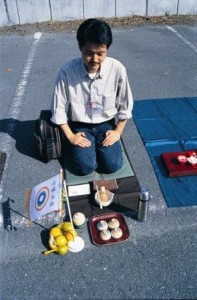
For convenience’s sake, put the right amount of tealeaves into the teapot beforehand, if you prepare to use one. This saves the trouble of bringing along the ‘tea caddy’. However, if matcha is to be served, the ‘tea caddy’ is a must, so are the ‘tea scoop’ for scooping out the tea powder and ‘tea whisk’ for whipping up the matcha.

Hot water is a must for both brewed and whisked teas.  Bring along a thermal flask with boiled water of the required temperature. As duration for brewing is crucial, a ‘timer’ with seconds display or a watch is essential to help keep track of time. A ‘tea towel’ will help catch any drip in the course of tea brewing or serving; and it can be used to wipe the used cups when we are packing after the tea gathering.

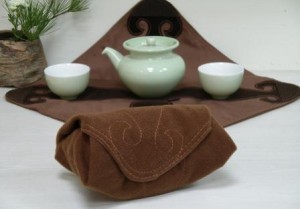
Lay a piece of ‘tea brewing cloth’ on the floor (or on the table, if applicable). Place the tea ware on the cloth. Make sure there is enough space at the outer edge for the others to offer tea to you. You may use either the cloth for wrapping the tea ware or a dedicated ‘pot wrapping cloth’ for this purpose.

Put the tea ware into your ‘carrying bag’, and you are ready to attend the Sans Self Tea Gathering.
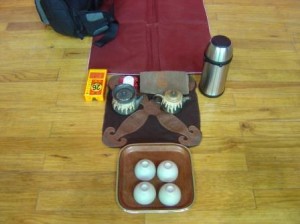
无我茶会小壶茶法茶具


无我茶会抹茶法茶具

55. Some practical tips about the ‘Tea Ware’ for Sans Self Tea Gathering

There should be a strainer at the base of the teapot’s spout to prevent tealeaves from blocking the flow of tea. The mesh should be very fine to catch even the very tiny residue. Otherwise, residue with some tea infusion may be left at the bottom of the teacups, affecting not just the water temperature, but making it difficult to wipe dry the teacups afterwards. A ‘strainer’ incorporated at the opening of the tea pitcher could complement the straining function of the teapot. Tea pitchers are used to distribute tea infusion into individual teacups. It is important that these pitchers have ‘anti-dripping’ design; otherwise, tea infusion may spill and wet the brewing area of fellow participants. (If a rug is used at the brewing area, quickly use the tea towel or tissue paper to absorb the tea infusion to avoid leaving any stain which could be hard to remove)

The size of the teapots and tea pitchers should be considered in relation to the number of cups. Avoid using teacups with a capacity of more than 50cc. Tea infusion should only fill 4/5 of the cups because each participant will be served a few rounds. Large teacups would require large teapots/tea pitchers as well as water flasks, which could be inconvenient when being carried around.  Use weightier teacups.  Do not use delicate teacups such as the eggshell porcelain for outdoor tea gatherings to avoid spillage in a sudden draft.  Fluted-shape teacups with small base are not advisable, as they may spill with a quick gust of air or being carried around on the tray

The serving tray should be just big enough for the cups. Also, avoid trays with very slippery surface to eliminate the risk of spillage when the cups are being carried around.

56. How is the best way for tea ware to travel?

Each item for the Sans Self Tea Gathering has to be packed in a damage-free manner.  Teapots, tea pitchers or tea bowls could be wrapped carefully with a ‘wrapping cloth’. Tea cups, be they stacked on top of each other, bundled up or ‘hooked’ onto the teapot and be wrapped together, must have ‘cup covers’ for extra protection; otherwise, they may be damaged by pressure. The thermal flask must be positioned upright and wobble-free, and not knocking against other tea ware in the carrying bag.

Organize the carrying bag into a few parts: one for the thermal flask; one for major tea ware such as teapot, tea pitcher and teacups; one for the tea serving tray, tea towel and timer; one for the seating mat; and one for personal items such as camera. This way, packing will be a lot easier. If possible, use a shoulder bag for ease of movement and flexibility.

When tea ware has to be transported in your checked-in baggage for an overseas Sans Self Tea Gathering, protect each item with personal clothing in a hard-case luggage.  If in doubt, bring them along in your hand luggage.
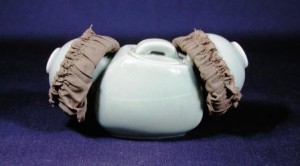
无我茶会一壶二杯包紮法


无我茶会一盅二杯包紮法

57. Things to note about the protective/wrapping materials for the tea ware

Apart from safety, protective/wrapping materials for the tea ware must also be considered in terms of hygiene, odour and appearance. ‘Hygiene’ means that the materials and printing on it must be pollution-free and easy to wash.  Materials with ‘odour’ will stay on the tea ware or be absorbed by the tealeaves; hence, it is important to choose odour-free materials.  ‘Appearance’ refers to the fact that the wrapping and unwrapping of the tea ware is a part of the ‘tea-brewing’ experience – ease of use and visual appeal will affect the mood of the participants. You may use the original commercial packaging or towels at home. While these will save you the worries about hygiene and odour, they may not be stylistically refined enough.

58. Which ‘tea’ should I bring?

This would cover the type and grade of tealeaves. ‘The type’ would depend on what is stated in the ‘Notification’ issued by the organizer; but the principle is to welcome ‘all types of tea’ or teas in a broad category. ‘The grade‘would be largely a personal choice, as long as it does not have an unpleasant smell or taste, and is not something you don’t like, because it would go against the aspiration of Sans Self Tea Gathering to encourage us to ‘accept and appreciate teas of all kinds’.

On what occasions would the organizer require a specific category of tea be used? For example, if a Sans Self Tea Gathering is planned for early spring to remind us of the arrival of the season, the Notification may make it clear that green tea is preferred; however, there will not be any restriction on the types. As for a memorial tea gathering, the organizer may request participants to bring along a certain type of tea because of its relationship with the person to be honoured.

59. How should be ‘tea’ be carried? (When should we put tealeaves into the teapot?)

With the exception of ‘powdered tea’, tealeaves can be added into the teapot before leaving home.  In the spirit of ‘simplicity and frugality’ of the Sans Self Tea Gathering, there is no need to bring along the tea caddy. Some of us may be worried about the quality of the tealeaves transported this way. Fret not. This is acceptable on the day itself, provided that the teapot is dry and there is no distinct odour or off-smell in the carrying bag. For tea gathering to take place the following day, get ready a tea caddy and leave it in the luggage. Put tealeaves into the teapot right before you leave for the tea gathering the next day.

Powdered tea has to be whisked in the tea bowls, and there is no way it can be placed in the bowls and be carried to the venue. It is, therefore, necessary to bring along a separate powdered tea container.

60. How to prepare the tea ware if two types of tea are to be brewed?

In the spirit of ‘simplicity and frugality’ advocated by the Sans Self Tea Gathering, we will not think along the line of ‘discarding the residue > rinse > and then put in another type of tealeaves’ when the organizer requests two teas be brewed. Instead, prepare an extra teapot, and pack another tea separately. The same set of teacups will be used.

Normally, such requests would be made for a gathering that lasts longer, or at a venue that is conducive for staying longer, or of long missed friends. There may be an intermission, or some other activities in between for the first and second situations mentioned above.

61. Preparing water for brewing and the choice of thermal flask

One of the rules of a Sans Self Tea Gathering is ‘to be self-equipped without expecting anything from the organizer’.  As such, each participant will have to bring along water for brewing. Given the improved temperature retention technology nowadays, the slight temperature drop in the flask will not affect the brew. However, if the water is kept in the flask longer than half a day, it is necessary to add hot water. The best time and place to do so is during meal break at the eatery you dine in.

Decide water temperature according to the type of tea you are going to brew. Make it 3°C to 5°C higher than required to provision for temperature drop on the way. Furthermore, the basic way of brewing adopted by the Sans Self Tea Gathering requires no pot warming. Use hot water to rinse the thermal flask before adding hot water to it will help eliminate heat loss. If the outside of the flask feels hot after hot water is poured in, insulation is inefficient and it is time to change the flask.

Opt for travel-size instead of household flasks. The size of thermal flask would depend on the number of cups to be served and rounds of brewing. Choose flasks made of impact-resistant and unbreakable materials, and look for one-push open button design – not only is this more convenient than the stopper type for pouring water out, you will not end up having a big splash in case the flask topples.

62. Sitting posture at a Sans Self Tea Gathering

Unless in the rare occasion where chairs and tables are made available, Sans Self Tea Gathering are normally held with participants sitting and brewing on the floor. How then should participants sit?  One can sit with parallel legs and bent knees (as in kneeling), with crossed legs and bent legs, or in a half-lotus position. We encourage kneel-sitting because it is more elegant and makes it easier for the participants to rise and serve tea. However, it would need a bit of practising for the inexperienced. Try gradually lengthen the time as you practise. Meanwhile, small collapsible chairs are allowed for participants with knee problem which do not allow them to sit on the floor.

Floor seating encourages closer interaction apart from the fact that there are no chairs and tables blocking the way. This goes with family members brewing tea together. What’s more, sitting on the floor allows you to feel the earth beneath you, giving rise to the feeling of harmony between man and land.

63. Some practical tips about the seating mat

Seating mats are essential since Sans Self Tea Gathering supports the idea of floor seating. In an outdoor setting, there will be small stones on the ground, so it is good to have the seating mat made of stretchable and durable materials; loose, spongy ones are not suitable.

Considering that Sans Self Tea Gatherings are organized in different locations, it is best to use tea ware that travels well. By the same token, seating mat has to be easy to carry. Consider seating mats that can be folded. A simple DIY version goes like this: Get a piece of dense sponge. Make a fabric cover slightly larger than the sponge and sew to divide it into four compartments. Cut the sponge into four squares of equal size. Insert a cut piece of sponge into a compartment and sew up. This way, you will have a seating mat that can be folded one-fourth of the size it opens up. Make sure the mat, when opens up, is large enough for you to be seated. If you are going to kneel-sit, the length of the mat should be slightly more than the distance between your knee and toes when seated. The width should be slightly more than that of the body when seated.

64. What should we bring along in addition, if it rains before the tea gathering or the ground is sandy/muddy?

Bring along a lightweight, water-proof cloth if the ground is wet or muddy. Lay it on the ground and put the seating mat and tea ware on top of it. This should take away the worries.

Why lightweight cloth, you may ask? We don’t suggest using plastic sheets because they are mostly lacking in visual appeal and are too slippery to stay in place, unless you can find some nice ones with a ‘cloth’ feel. By comparison, water-proof fabric looks more appealing. Lightweight material is easy to bring along and clean afterwards. This cloth should cover the area of the seating mat and brewing area; and yet, it should not be so big that it exceeds the area allocated by the organizer and may cause a slip or trip.

65. Attire and shoes for Sans Self Tea Gathering

This would depend on the occasion – formal gatherings require proper attire; for occasions among friends, casual clothing is fine. Whichever the case, the clothes you wear must allow you to be seated and brew tea with ease. Neckties and accessories such as long necklaces should be secured in place to avoid it finding its way into the tea infusion or hitting the tea ware.

Should the venue require participants to remove their shoes throughout the event, pay attention to the colour and thickness of the socks/stockings – a pair of very transparent silk stocking would create the impression of one being bare-footed.

For venue that does not require participants to take off their shoes throughout the event, choose shoes that can be ‘put on’ and ‘taken off’ easily. It will be inconvenient, not to say unbecoming, if you have to tie or untie your shoelaces or pulling your shoes strenuously on or off each time you get back to your seat or rise to offer tea.

66. What kind of preparation is required for a tea gathering that calls for tea time snacks?

If tea time snacks are to be shared during the tea gathering, participants have to prepare both the snacks and serving utensils. As the name suggests, these snacks are to be taken with tea. A small quantity will serve the purpose, since each participant will get to enjoy snacks brought along by several fellow participants. The flavour of these snacks should harmonize with that of the tea – avoid snacks that are too strong, too salty, too spicy or too sour in taste. Equally inappropriate will be snacks containing parts that require us to spit out at the end or those that are too chewy, as these will cause inconvenience and create anxiety.   Bring along snacks that are easy to handle, preferably individually packed.

The number of servings should match that of cups to be served. For example, the Notification specifies four cups are to be served, then bring along four servings of snack. If the participants are expected to offer tea to onlookers, the Notification will specify the amount of extra snacks required.

We should also prepare utensils for serving snacks. Bring along two small dishes; alternatively, use two pieces of paper towel. One of these should be placed on the tea serving tray for the snacks you’ve brought along; the other at an appropriate spot at the tea brewing area for others to offer snacks to you. Remember to pack equipment such as bamboo knife, if required.

67. Example of tea brewing at a Sans Self Tea Gathering: Small teapot brewing

As mentioned, Sans Self Tea Gathering encourages the use of travel tea ware for fuss-free tea brewing.  There is, however, no restriction on the style and brewing method. The ‘small pot’ brewing which we are going to talk about and the ‘lidded-cup’ brewing and ‘powdered tea’ brewing which we will discuss later are but for reference only.

Take your seat, and lay the seating mat on the floor. Stand behind the rear end of the mat, take off your shoes, and sit on the mat. Place the carrying bag on your right. If the ground is wet or too sandy/muddy, lay the cloth liner first before laying your seating mat, aligning the rear end of both. If there is no cloth liner, shift your seat slightly to avoid the inconvenient surface, provided this does not affect the order and the overall arrangement of the seats.

Place the tea serving tray in front of the seating mat. Leave some space between the tray and the seating mat as the tea brewing area. Take out the tea ware. Say you have bundled two teacups with the teapot together, and the other two teacups with the tea pitcher (in the event that each participant is to bring along four teacups). Take out the bundle with teapot first, unwrap and place the teacups and teapot on the tea serving tray. Put the wrapping cloth and cup covers back in the bag. Then, take out the bundle with the pitcher, unwrap, and lay the wrapping cloth (which doubles up as tea cloth) between the seating mat and tea serving tray. Remove the teapot from the tray and put it on the tea cloth, then put the two cups from the second bundle on the tray. Arrange the four cups properly, and make sure the teapot and tea pitcher are at the centre of the tea cloth.

Leave some space at the front end of the tea cloth for others to place their cups when they offer tea to you. Leave some space at the rear end of the tea cloth as well, to accommodate the tea towel and timer (tea towel could be replaced by paper towel, and timer could be replaced by your watch). For special reasons such as space constraint or children participate in brewing, the tea serving tray could be positioned to the right of the tea cloth to make the tray more accessible. Shift the tea cloth a bit to the left.

Take out the tea towel and timer. Place them behind the teapot and tea pitcher. The thermal flask should be placed to the left of the tea cloth (In general, participant will use their right hand to hold the teapot, and pour the water using their left hand).

According to standard procedure, tealeaves would have been put into the teapot. When it is the scheduled time for brewing, pour an appropriate amount of hot water from the flask into the teapot, and then sit quietly while tracking the time.  Don’t be distracted; have your mind settled down and track your time by simply counting your breath. When it is about time, check your timer to ascertain timing and pour all the tea infusion into the tea pitcher. Then, pour tea from the pitcher into the teacups. Hold the tea serving tray with both hands and rise to offer tea. Leave the last cup of tea on your tray and return to your seat. Place the cup on your tea cloth.

When everyone has finished the first cup, you may start brewing a second time. Follow the same routine – track the time, sit down quietly and pour the tea into the cups. This time, put the pitcher and tea towel on the tea serving tray. Hold the tea serving tray with both hands and rise to offer tea. Pour tea from the pitcher into the cups you have already offered; use the tea towel to catch any drip. Return to your seat and pour a cup for yourself.

When it is time for packing, wipe the cups you have drunk from with the tea towel. Bring along the tea serving tray and collect the cups you have served others. Return to your seat and place your cup onto the tray as well.

Screw back the cover of the flask (during the gathering, it is not necessary to do so each time after you have poured hot water; just close the inner opening will do), put it back into the carrying bag, and then put back the tea towel and timer.  Put two of the cups onto the tea cloth, and move the teapot to the tray. Take out two cup covers from the bag and put them on the two cups. Use the tea cloth (which doubles up as a wrapping cloth) to wrap the tea pitcher and the two covered cups into a bundle, and put this back in the bag. Take out the other wrapping cloth and the remaining cup covers.  Pack the teacups and teapot carefully and put them back into the bag. Put back the tea tray. Finish by folding the seating mat and cloth liner and put them back.

68. Example of tea brewing at a Sans Self Tea Gathering: Lidded cup brewing

You may want to brew with a lidded cup. In this case, you would have packed the lidded cup, the tea pitcher and cups into three separate bundles (some may want to wrap equal number of cups separately with the lidded cup and pitcher, making two bundles). Begin by laying the seating mat.  Put the tea serving tray in place, and take out the bundle of ‘cups’. Unwrap and put them on the tray, two in a stack; keep some space free on the tray.  Then, take out the ‘tea pitcher’ and unwrap, leaving it temporarily on the tray. Finally, take out the ‘lidded cup’. Unwrap and lay the wrapping cloth on the floor as the tea cloth. Move the tea pitcher to the centre of the tea cloth, side by side with the lidded cup. Leave some space at the front end of the tea cloth for others to place their cups when they offer tea to you. Meanwhile, place the tea towel and timer at the rear end of the tea cloth.

Tealeaves would have been added to the lidded cup beforehand. Brew tea by pouring in hot water. Track the time for the desired strength. Take up the lidded cup and pour all the tea infusion into the tea pitcher. Then, pour tea from the pitcher into the teacups. Offer tea with the tea serving tray. From the second brewing onwards, offer tea with pitcher on the tray, and pour tea into the cups you have already offered.

At the end of the gathering, pack tea ware individually. Put them back into the carrying bag in the reverse order.

69. Example of tea brewing at a Sans Self Tea Gathering: Powdered Tea Brewing (and Drinking)

For powdered tea to be served as the Sans Self Tea Gathering, follow the ‘Whisked Powdered Tea for Small Cups’ format.  Powdered tea is whisked in the tea bowl before being poured into small cups to be served.  As far as preparation concerned, wrap teacups and tea bowl into the first bundle, the tea caddy of powdered tea the second, and the tea scoop and tea whisk the third.  Follow the standard procedure to lay the seating mat and tea serving tray. Take out the second and then the third bundles, unwrap and put the tea caddy of powered tea, tea scoop and tea whisk on the tray. Take out the first bundle, use the wrapping cloth as tea cloth and lay it on the floor. Place the tea bowl at the centre of the tea cloth, the tea caddy to its left, and the tea scoop and tea whisk to its right. The tea cups should be placed on the tray.

Add an appropriate amount of powdered tea to the tea bowl, add water and whisk. Hold the bowl and pour it into the cups (use a ‘spouted tea bowl’, i.e., a tea bowl with a serving spout). Offer tea to others with the teacups on the tray. From the second brewing onwards, whisk the tea and bring over the tea bowl for serving.

When it is time for packing, pour some hot water into the tea bowl. Swirl the water around for a while and then pour it into your own cup; this will help dislodge the tea powder residue in the cup. Take this as a ‘parting drink’ and finish it in one if not two cups.  Fellow tea drinkers may do the same – pour some hot water into the cup with powdered tea residue, swirl and drink before wiping the cup.

70. There is no pot warming or cup warming in the description of the methods above. Why?

As the simple approach of a Sans Self Tea Gathering  goes, the steps of putting in tealeaves, appreciating the appearance, taking in the aroma and warming the cups and others have been eliminated. Tealeaves are to be put into the teapot before leaving home.

Appreciating the appearance and taking in the aroma of the tealeaves would help tea brewers decide the brewing methods. Should the guests be invited to do the same, it will complicate the procedure on the one hand, and disturb brewers from making correct judgement on the other. One of the principles observed by a Sans Self Tea Gathering is “making an effort to brew well”. Tea brewers need to have thorough understanding of the tealeaves before brewing. They will judge the amount to be used by appreciating the appearance of the tealeaves. Meanwhile, brewing time becomes extremely important after two to three brewings, and one way to ensure sound judgement is by taking in the aroma. Pot warming helps prevent teapot from drawing too much heat from the water. To compensate for the omission of pot warming, just increase the water temperature when you are preparing the water, or slightly extend the duration of brewing.  Cup warming helps prevent tea infusion from cooling too fast. Considering the relatively short distance between participants, and the duration from the time tea is offered to the time it is consumed, the tea infusion would not have cooled significantly. As such, this step can be eliminated.

71. Lighting requirement for an evening Sans Self Tea Gathering

An evening Sans Self Tea Gathering reminds participants just how beautiful a night it is. Participants would have to bring along their own lighting device, which would have to comply with the following requirements:

a. It must be easy to carry, safe and hassle-free.  If the outing involves a flight journey, check if the fuel is allowed to be checked-in.

b. Bring along, or create your own lighting equipment. This will add colour and diversity to a wonderful evening event.

c. Pay attention to wind-proof design that keeps it out of draughts – this is important especially with candle or oil lamps.

d. Choose light that shines downwards. Make sure it lights up the tea ware, especially the tip of the spout to ensure you can see clearly the height of the stream of water being poured into the teapot.  Do not rely on hand-held lighting device (such as a torch); this may accidently points at the others when you put it down on the floor.

e. The lighting should last for an hour and a half, and above. Light up your area from the time of preparation – do not wait until you begin brewing. This is to make sure the ‘tea ware appreciation and networking’ session is bright enough for the participants.  For battery-operated device, bring a spare set for replacement.

72. What is to be achieved with a Sans Self Tea Gathering?

A Sans Self Tea Gathering enables participants to embrace the spirit of the Way of Tea, including an absence of hierarchy, no expectation of reciprocity, setting aside of personal preferences, and an effort to improve and progress. There are no facilitators or event directors, and silence is observed throughout the gathering to reveal the beauty of collective rhythm. The aim of the tea gathering is achieved if the above has been fulfilled.

Making new friends during the pre-event ‘tea ware appreciation and networking’ session or other post-event activities, and catching up with old friends at the gathering could be considered added values of Sans Self Tea Gathering.

Some participants may find it too much of a hassle to travel this far with tea ware on tow for just a few rounds of tea. There may even be a sense of loss if the gathering fails to bring out the characteristics of Sans Self Tea Gathering.

To enrich the experience, one may include post-event activities such as talk, music performance or hiking.

73. How to enjoy Sans Self Tea Gathering in a relaxed manner?

Avoid focusing too much on socializing, and make sure you prepare yourself well, as follows:

a. Familiarize yourself with the rules of Sans Self Tea Gathering. This way, you will not make mistakes that may spoil your mood.

b. Prepare all the necessary items and make sure they work properly. Avoid poorly-designed tea pitcher that drips, teapots with insufficient straining capacity, and seating mats that are too soft to cushion you comfortably against small stones – these will stop you from fully enjoying the experience.

c. Practice brewing beforehand.  Know how much water is needed for a certain number of cups, the required water temperature, and the way to brew a perfect cup. It will be too late to apologize if what you offer is far from being perfect.

d. Find a way to sit comfortably on the floor, and get used to it. This requires practice, whichever you are going to sit – numbness and pain will take away the pleasure you should be feeling at a Sans Self Tea Gathering.

74. Choose tea ware that travels well for Sans Self Tea Gathering.

Get yourself a dedicated set of ‘Sans Self Tea Gathering Tea Ware’ – this not only comes in handy, but also doubles up as a travel set.

It could be further simplified to ‘a pot, two cups and a flask’ if you are travelling alone. Put the covers on the teacups and hook them onto the spout and handle of the teapot. Wrap them with a wrapping cloth into a bundle. Bring along a travel-size flask of hot water.

When you are on the plane, on the train or visiting a friend, simply unwrap the bundle and lay the wrapping cloth on the table as tea cloth. Place the teapot at the centre, and the two cups in front of the pot, side by side. Tealeaves would have been added to the teapot before you leave home, so just pour water from the flask, track the time (with the timer, your watch, the wall clock or by mental counting). When the appropriate strength is attained, pour all the tea infusion into the cups by going back and forth (The amount of water must be correct to ensure all the tea infusion is emptied. By going back and forth, the strength of tea will be even between the two cups). When you are enjoying the tea alone, take the first cup followed by the second cup. When you are on a visit, offer a cup to your friend. When you are on the plane on the train sitting next to a stranger, offer a cup to him/her.  Three rounds afterwards, you may pack your tea ware and continue with the journey. When you are back at the hotel, clean and leave the pot, cups, cup covers and wrapping cloth to dry. The following day, you may add some tealeaves to the teapot, and with ‘a pot, two cups and a flask’, set off for another satisfying day accompanied by tea.


  (3404)

第六章 與會者事前的準備-蔡荣章

《無我茶會Sans Self Tea Gathering 180條》

蔡荣章著Author:Rong-tsang Tsai

ISBN978-957-9690-08-9 ,“无我茶会Sans Self Tea Gathering180,”, First edition: 1999.9, Second edition: 2010.9。《无我茶会180条》,1999.9第一版,2010.9第二版,台北陆羽茶艺股份有限公司,2012.05.20修订版。

第六章 與會者事前的準備

53.無我茶會茶具「精儉」的要求

無我茶會不僅行政工作要力求簡便,個人攜帶的茶具也要簡便,是以「旅行用茶具」作為準備的原則,因為簡便才不至於把很多時間花在茶具的準備、操作與收拾上,才有多餘的時間可以體會、享受茶會的氣氛與意境。

無我茶會還要求不帶珍貴的茶具,雖然珍貴的茶具在「茶具觀摩與聯誼」的時候會造成熱烈的迴響,但也容易引起比較,出發前就思量著應帶什麼茶具才能夠在會上奪得異彩。攜帶珍貴的茶具,一路上也會提心吊膽,失掉了許多參加茶會的樂趣。再說,簡便也是吾人處世很好的一種態度,包括對名、對利、對物,以及方法與手段。

上述所說的「珍貴」,是指一般人的衡量標準,如果使用者對該件茶具已習以為常,攜帶上、使用上都不會造成得失上的太大負擔,我們可以將之排除在“不宜攜帶”的範圍。

54.無我茶會的基本道具

無我茶會若是席地而坐,應該準備一塊「坐墊」。無我茶會是人人泡茶,所以要有泡茶的「壺」,或打末茶的「碗」。無我茶會是人人奉茶,所以要有「杯子」,杯子的數量依「公告事項」所定。如果用壺泡茶,還要有容納茶湯的「茶盅」,以便將茶分倒入杯;因為即使第一道可用平均分茶法直接將茶倒入杯中,但第二道以後呢?必須將泡好的茶全部倒入盅內,然後端茶盅出去奉茶。因為你的杯子是分散在客人那邊,如果直接以壺出去倒茶,先倒的必淡,後倒的必濃,要來回倒以求濃度平均是不方便的。為了端杯或端茶盅、茶碗(打末茶時)出去奉茶,需要一個「奉茶盤」。

為了簡便,以壺泡茶時,可以在出門前將準備沖泡的茶葉放入壺內,這樣就不必另行攜帶放茶葉的「茶罐」;但如果是打末茶,就必須準備裝有末茶的茶罐。打末茶時,還要有舀末茶的「茶杓」及打末茶的「茶筅」。

不論泡茶或打「末茶」,都必須有熱水,所以必須配備熱水瓶,裝妥所需溫度的熱水。泡茶需要控制茶葉浸泡的時間,所以攜帶一只讀秒的「計時器」,或以手錶代替。泡茶、奉茶時,難免有茶水滴落,有條「茶巾」比較方便,這條茶巾還可以在收拾茶具之前用來擦拭自已用過的杯子。

泡茶時(包括打末茶),應該有條「泡茶巾」鋪在地上(桌上泡茶時則鋪在桌上),上面放置茶具,其外緣還要留出空間作為別人奉茶給自己的地方。這條泡茶巾可以用包裹茶具的「包壺巾」代替,也可以另行準備。

以上這些茶具用「茶具袋」裝著,就可以參加無我茶會了。

无我茶会小壶茶法茶具

无我茶会抹茶法茶具

 55.無我茶會的「茶具」應注意哪些使用上的功能

泡茶用的茶壺,其出水孔要有濾網,免得被茶葉堵塞而出水不良。濾網要細,否則茶湯中細渣太多,喝茶的人無法將茶湯喝光,每次留一些在杯內,不但影響下一道的水溫,最後擦拭杯子時也不方便。在茶盅的盅口加一個「濾網」可以彌補茶壺濾渣功能的不足。茶盅最主要的功能是分茶入杯,盅嘴要能「斷水」,否則倒茶時會有茶水滴落到外面來,出去奉茶時會把別人的泡茶區弄濕。(如果在地毯上泡茶,應立即以茶巾或紙巾將茶湯儘量吸乾,否則染上茶色後不容易去除。)

壺、盅的大小應配合杯數的需要,無我茶會使用的杯子不要超過50cc,所倒茶湯也以八分滿為限,因為往往要喝數位朋友的數道茶。杯子太大,壺盅也要大,保溫瓶也要大,都導致茶具攜帶上的不便。杯子最好厚重一些,薄胎的杯子,在戶外使用,一遇風大,容易被吹倒。底部細小的盞形杯也不適宜,不但風吹易倒,奉茶走動時也容易傾倒。

奉茶盤不要太大,放得下奉茶的杯子即可。奉茶盤的表面不要太光滑,否則起身奉茶,杯子容易滑動。

56.如何攜帶茶具才好

無我茶會的茶具必須有攜帶上防破損的包裝。壺、盅或碗可用「包壺巾」包紮,杯子不論是疊在一起包成一包,還是扣在壺身上包成一包,都要有「杯套」將杯子保護好,否則直接接觸擠壓容易破損。保溫瓶放置的地方要能固定,避免撞擊茶具。

裝茶具的袋子規劃成數個區域,例如一個區域放熱水瓶,一個區域放壺、盅、杯等主茶具,一個區域放奉茶盤、茶巾、計時器等物品,一個區域放坐墊,一個區域放相機等個人物品。如此在擺設茶具、收拾茶具時才不致亂成一團。茶具袋若能背在身上,行動起來較為方便。

出國或遠地參加無我茶會,若將茶具作為托運行李,除行李箱要硬殼外,每件茶具還要以衣物加強保護,且避免在箱內碰撞。若沒有把握,最好作為隨身行李攜帶。

无我茶会一壶二杯包紮法

无我茶会一盅二杯包紮法

57.保護茶具的包裝器材有何應留意的地方

無我茶會茶具的包裝器材除安全性外應注意衛生、無味與美觀。「衛生」包括材料、印刷的無污染與便於清洗。包材若有「氣味」會附著於茶具或被茶葉吸收。包材還得要求「美觀」,因為它與茶具為伍,解開與打包的過程都是「泡茶」的一部分,順利、美好與否都影響到參加者的心情。繼續使用商店的包裝材料,或用家裡的毛巾、餐巾來包裹,雖然衛生、氣味可能無慮,但操作過程難免顯得粗糙。

58.帶什麼「茶」才好

這個問題包括帶何種茶與什麼等級的茶。「帶何種茶」要看主辦單位在「公告事項」上怎麼約定,原則是「種類不拘」或哪一大類的茶。至於「帶什麼等級的茶」,不必特意去買什麼等級的茶,但有異味的茶、自己不喜歡的茶是不可以帶去參加無我茶會的,因為那已經不是「無好惡之心」所訴求的範圍。

什麼情況主辦單位才會指定帶特種茶類呢?如這次無我茶會在「早春」召開,茶會的目的又在提醒人們注意春天的到來,公告事項上可能會要求大家都帶綠茶來,當然何種綠茶就不能再設限了。另一種狀況是為追念某人的無我茶會,此人與某種茶有特殊的緣分,於是主辦單位要大家都帶那種茶。

59.「茶」如何攜帶(什麼時候將茶放入壺內攜帶才好)

除非是沖泡「粉末茶」,否則可以在出門前將茶放入壺內,無需另行攜帶一罐茶葉,因為無我茶會要求「精儉」。有人擔心這樣做會不會影響茶葉的品質?如果茶會就在當天進行,而且壺是乾燥的,茶具袋內又沒有其他氣味,茶葉放在壺內是無妨的;若茶會是在隔天以後舉行,那就準備一罐茶葉放在行李箱內,出門參加茶會前才將茶葉放入壺內。

粉末茶一般都在碗內調打而成,而且無法事先放置碗內,所以只得另備容器攜帶。

60.泡兩種茶葉時,茶具如何準備

由於無我茶會講求精儉,所以當主辦單位要求泡兩種茶時,我們不會往「去渣、清洗、再放第二種茶」的方向思考,而是在準備茶具時多準備一把壺,裝另外一種茶,單獨包成一包,茶杯只用一套,不做更換。

從事此「泡兩種茶」的規劃,一定是主辦單位認為要在會場上停留較長的時間,或許是環境適合較長時間的逗留,或因闊別多年的老友相聚。第一種茶與第二種茶中間大概會安排一段休息或其他活動。

61.泡茶用水的準備及對保溫瓶的要求

無我茶會有一條規則,即是「萬事自備,不求主辦單位為你做些什麼。」所以泡茶用水也是自己準備妥帶去。現在旅行用保溫瓶製作得不錯,半天內水溫降得不多,不會影響泡茶效果,但如果超過半天,就要考慮途中有什麼地方可以加水,半天總會遇到吃飯時間,可以利用這個機會裝水。

裝入保溫瓶的水溫要依泡什麼茶而定,而且比所需要的高3 ~5°C左右,因為途中會降一點,而且無我茶會的簡便泡茶法是不溫壺的。將保溫瓶先用熱水涮過再裝,可減少保溫瓶本身吸掉的熱量。若裝入熱水後,發覺保溫瓶外表熱熱的,表示保溫瓶的隔熱效果出了問題,應更換一支使用。

保溫瓶以旅行用的形式為宜,家庭用的大隻保溫瓶不方便。旅行用保溫瓶的大小視該次茶會泡幾杯茶、泡幾道茶、將用掉多少熱水而定。保溫瓶以摔倒不破的材質為佳,倒水時不必拔掉整個瓶塞,只按一下蓋鈕者更佳,因為這種型式的保溫瓶,泡茶時較方便,萬一傾倒時也不至於讓熱水大量潑出。

62.無我茶會就坐方式的探討

無我茶會除特殊情況使用桌椅泡茶外,最方便的是大家席地而坐、席地泡茶。若是席地而坐,用何種坐姿呢?跪坐、盤坐、單盤坐,都可以,但我們鼓勵跪坐,因為這種坐法比較美觀,而且起身奉茶比較方便,只是未曾習慣的人必須預作練習,逐次增加跪坐的時間。如果因為膝蓋不好無法席地而坐,備把小摺椅是被允許的。

無我茶會鼓勵席地而坐,除了方便外,沒有桌椅的阻擋,人與人間更加親密,即使家人一起泡茶,也是同樣道理。席地而坐還可以體會人與大地結合的感覺。

63.坐墊的功能要求

由於無我茶會鼓勵席地而坐,所以坐墊成了必備之物。室外地面常會有小石子,所以坐墊的質地要具彈性又要堅韌,太鬆軟的海綿不適宜。

無我茶會經常外出舉辦,所以使用旅行用茶具,坐墊也要考慮可以摺疊者。將堅韌的海綿墊裁成四塊,裝在縫成四方組合的布套內,就成了可以摺成四摺的坐墊。攤開後的面積,要足夠讓您坐下,如果是採取跪坐的方式,其長度要稍大於跪坐後膝蓋到趾間的距離,寬度要微大於坐下後身體的寬度。

64.茶會前下過雨,或擔心坐在泥地上,應增加什麼配備

地面潮濕,或會場上有泥土地,這時若有一條防潮的薄布鋪在地上,上面再放置坐墊與茶具,就沒有任何煩惱了。

為什麼強調“薄布”,因為若用塑膠布,除非製作得像布料的質感,否則不好看,而且容易滑動。經防潮處理的布料看來較美觀,薄一點容易攜帶與清洗。這塊墊布的面積要能涵蓋坐墊與自己泡茶的地方,但也不能太大,免得佔用的面積超過了主辦單位的規劃,也避免別人走動時踏到或絆著了。

65.無我茶會的服裝與鞋子

參加無我茶會的穿着要配合茶會的性質,若正式的茶會,穿著正式一點的服裝,若一些好友相聚,輕鬆一點無妨。但不論正式與否,方便「就坐」與「泡茶」都是要考慮的,胸前的領帶與飾物要固定在衣服上,免得泡茶、奉茶時撞擊到茶具或浸泡到茶湯。

如果茶會在必須全程脫鞋子的地方舉行,要注意襪子的顏色與厚薄,透明度太強的絲襪,看來會像赤腳的樣子。

不需全程脫鞋子的地方,鞋子也要挑選「穿」、「脫」方便的款式,否則脫鞋坐上坐墊、穿鞋出去奉茶,每次都得鬆綁鞋帶或以手拉扯鞋子,不方便又不雅觀。

66.茶會間安排有茶食享用時,如何準備

茶會間若安排有茶食享用,參加者就必須準備茶食與供應的設備。所謂茶食是指喝茶間搭配的小點心,份量不要多,因為每人都要享用數位茶友帶來的茶食。味道不要太強,太鹹、太辣、太酸,皆與茶味不和諧。不要吃了尚需吐渣的食品,也不要不易咀嚼的食物,這些皆為茶友帶來困擾。為攜帶與拿取的方便,最好每份茶食皆有獨立的包裝。

攜帶多少份數呢?相同於泡茶的杯數,公告事項上寫明帶四杯,就帶四份茶食。若此次茶會尚奉茶給圍觀的來賓,則依公告事項的約定攜帶額外的茶食。

除茶食外,尚需準備放置茶食的器皿。可帶二個小盤子,但為求簡便,可用二張餐巾紙代替,一張放在奉茶盤上放茶食,一張放在泡茶區適當的地方供別人放茶食。若供應的茶食尚需竹刀之類的器物,可另行準備。

67.無我茶會泡茶法舉例之一:小壺茶

無我茶會是攜帶旅行用茶具,以簡便泡茶法泡茶,但茶具的形式與泡法不拘。現在提到的「小壺茶法」與後面提到的「蓋碗茶法」與「末茶法」僅供參考而已。

找到自己的座位後,先將坐墊攤開鋪妥,站在坐墊的後方,將鞋子脫下,坐在坐墊上,茶具袋放在身體的右側。若地上潮濕或泥沙太多,而且帶有墊布,則先鋪上墊布,再對齊墊布的後緣放置坐墊。若未攜帶墊布,在不影響座位秩序下,稍微挪一下位子,以避開不便的地面是被允許的。

取出奉茶盤,放在坐墊的前方,奉茶盤與坐墊間空出個「泡茶區」。取出茶具,若您的包法是二杯與壺包成一包,另二杯與盅包成一包(假設約定泡四杯),則先取出壺的那一包,打開後將杯子與壺移放奉茶盤上,收起包壺巾與杯套;再取出“盅”的那一包,打開包壺巾後就鋪在坐墊與奉茶盤間作為泡茶巾使用。將奉茶盤上的壺拿回泡茶巾上,將新取出的二個杯子放上奉茶盤,將四個杯子在奉茶盤上排妥,將壺與盅在泡茶巾的中間部位擺好。泡茶巾的前端留出空間,作為別人前來奉茶時擺放茶杯的地方,泡茶巾的後端騰出空間,用以放置茶巾與計時器。(茶巾可用紙巾代替,計時器可用手錶代替。)若由於場地的關係或小朋友泡茶,端取奉茶盤不方便,可將奉茶盤改放到泡茶巾的右側,只要將泡茶巾稍微向左移一些即可。

拿出茶巾與計時器,放在壺、盅的下方。拿出熱水瓶,放在泡茶巾的左側。(一般習慣以左手沖水,以右手持壺。)

標準的做法是茶葉已放在壺中,到了約定泡茶的時間,打開熱水瓶,於壺內沖入適量的熱水,計時、靜坐。這時不必操心別人到底怎樣了,讓自己安靜下來,可利用呼吸的次數測定茶葉浸泡的時間,到了差不多該倒茶的時候,核對一下計時器,將茶湯全部倒入盅內。持茶盅將茶分倒入杯。雙手端起奉茶盤,起身出去奉茶,最後一杯等回座後放下奉茶盤,才端放在自己的泡茶巾上。

看大家大致喝完第一道茶,開始沖泡第二道,依舊計時、靜坐、倒茶,然後將茶盅與茶巾移放奉茶盤上,雙手端起奉茶盤出去奉茶,持茶盅將茶倒於自己奉出去的杯子內,萬一有茶水滴落,用茶巾擦乾,回座位後也為自已斟上一杯。

收茶具時,先將自己喝過的杯子用茶巾擦拭一下,端奉茶盤出去收回自己的杯子。回座位後將自己的一杯也放回奉茶盤。

將熱水瓶蓋妥(每次沖水後不必蓋上外蓋,只將內塞出水口關上即可),收回茶具袋內。將茶巾與計時器收妥,從奉茶盤上取下二個杯子,放到泡茶巾上,泡茶巾上的茶壺暫放到奉茶盤上,從茶具袋內取出杯套,將二杯與盅包好收回袋內。從袋內取出另一條包壺巾與杯套,將剩下的二杯與壺收好。接著收拾奉茶盤,最後起身收拾坐墊與墊布。

68.無我茶會泡茶法舉例之二:蓋碗茶

如果您是以蓋碗做為沖泡器,而且將蓋碗、茶盅、杯子分成三部分包裝(也可以將杯子分散與蓋碗、茶盅一起包裝),在鋪好坐墊,放妥奉茶盤後,先拿出「杯子」的一包,打開後將杯子放於奉茶盤上,並二個二個疊放在一起,以便留出部分奉茶盤的空間。接著拿出「茶盅」的一包,打開後將茶盅暫放到奉茶盤上。最後拿出「蓋碗」的一包,打開包壺巾後就鋪在地面上作為泡茶巾,將茶盅拿到泡茶巾上,與蓋碗在泡茶巾的中間排成一列。泡茶巾的前端依然騰出作為別人前來奉茶的地方,泡茶巾的後方放置茶巾與計時器。

茶葉是事先放在蓋碗內的,泡茶時依舊沖水、計時,浸泡到適當濃度,持蓋碗將茶湯一次倒於茶盅內,再持茶盅將茶分倒入杯,端奉茶盤出去奉茶。第二道以後則端茶盅出去,將茶倒於自己奉出去的杯子內。

泡完茶,收茶具時仍依取出時之相反次序,將之一件件收回茶具袋內。

69.無我茶會泡茶法舉例之三:粉末茶(含飲用法)

如果您準備在無我茶會時沖泡粉末茶,最好採用「末茶小杯點茶法」的方式,也就是在茶碗內將末茶打妥後,分倒於小杯內奉給茶友們喝。這時茶碗與杯子可以包成第一包,末茶罐第二包,茶杓與茶筅第三包。依前述放妥坐墊、奉茶盤,逐次拿出第二包與第三包,將末茶罐與茶杓、茶筅放於奉茶盤上。拿出第一包,將包壺巾鋪在地上作為泡茶巾,茶碗放在泡茶巾的正中央,末茶罐拿到茶碗的左側,茶杓與茶筅拿到茶碗的右側,茶杯放於奉茶盤上。

泡茶時,取適量的末茶於碗內,沖水、打茶,持茶碗將茶分倒入杯(這時的茶碗應是「有流茶碗」,也就是設計有倒嘴的茶碗),端奉茶盤出去奉茶。第二道以後,將茶打好,以奉茶盤端碗出去奉茶。

到了最後的收拾茶具,擦拭杯子前,倒些水涮一下茶碗,涮碗的水再沖一下自己喝末茶的杯子,免得碗與杯內黏附太多的末茶。沖完杯子的茶湯作為「回味湯」喝掉,一杯喝不完,喝二杯。被奉末茶的人也可以這樣做,倒一些熱水于盛末茶的杯子內涮一下,喝下茶湯後再擦拭杯子。

70.上述泡茶法舉例,為何都沒有提到溫壺、燙杯等動作

因為無我茶會是使用簡便的泡茶法,所以省略了置茶、賞茶、聞香、燙杯……等動作。置茶改在出門前就將茶葉放入壺中。賞茶、聞香除供泡茶者作為判斷茶葉沖泡法的參考資料外,不讓客人為之,一方面是因為若全面實施,過程太過繁瑣,二方面是加重「泡茶者要把茶泡好」的意念。泡茶者泡茶前應對茶有充分的瞭解,所以必須仔細觀賞,尤其對置茶量的判斷;二、三道以後對浸泡時間的掌握很重要,可利用每次沖泡前的「聞香」判斷所需浸泡的時間。溫壺的主要目的在減少壺身吸收水溫,省略後只要提高備水時的溫度或稍微延長茶葉浸泡的時間,就可以補救過來。燙杯的目的在於減少茶湯降溫的速度,但以無我茶會奉茶的距離與所需時間來看,端到客人面前,等到客人飲用時還不至於變得太冷,所以省略無妨。

71.無我茶會對「夜晚茶會燈」的要求

晚上舉辦無我茶會是要提醒人們欣賞夜色之美,每人自備一盞個人照明

用燈,這盞「夜晚茶會燈」的要求如下:

a.便於攜帶,而且安全無慮。若是搭飛機,應考慮所準備的燃料是否可以獲准上機。

b.每人自行準備,甚至自己創作,避免大家採購同一型式的燈具。

c.考慮到防風的功能,尤其是使用蠟燭與油燈的時候。

d.燈光要能朝下照射到茶具,尤其是壺口,否則看不清楚沖水的高度。不要依賴手拿著燈具照射(如使用手電筒),否則放下後,一不小心就照射到別人的臉上。

e.續燃力要在一個半小時以上,因為從備具起就要點亮,不能到了要泡茶的時候才打開,否則「茶具觀摩與聯誼」的時間太黯淡。若使用小電池,可多帶一組,以便半途更換。

72.參加無我茶會應達成多少目的

參加無我茶會的主要目的是透過茶會的進行,體會無尊卑之分、無報償之心、無好惡之心、求精進之心等的茶道精神,並享受無需指揮、靜默不語等的群體律動之美。若能專心於如此境界的把握與體認,茶會目的足矣。

若能於會前的「茶具觀摩與聯誼時間」、會後的其他活動裡認識更多的朋友、與老友敘敘舊,當是參加茶會的另一項收穫。

有些人認為老遠帶著茶具來泡這麼幾道茶不划算,若再遇上他所參加的茶會沒能將無我茶會的特質表現,更難免有失落感。

如果要使茶會更加豐富,可在茶會結束後繼續安排一些活動,如演講、音樂會、登山等。

73.如何輕鬆愉快地享受無我茶會

要能輕鬆愉快地享受無我茶會,除不要有太多社交性的目的外,還要有下列的預先準備:

a.熟知無我茶會的規則。如此才不至於發生錯誤而影響心情。

b.備妥所需的道具,而且功能完善。如果茶盅斷水功能不良,奉茶時茶湯到處滴落;濾渣功能不佳,不是茶湯倒得不順暢,就是茶湯裡的茶渣很多;坐墊堅韌度不夠,就坐時小石子刺痛了腳。這些都會讓您無法安心參與茶會。

c.熟練泡茶技藝。知道沖多少水方夠所需杯數的湯量;怎樣的溫度、如何泡法才能得出高品質的茶湯……,否則把茶泡壞了,抱歉都來不及。

d.讓自己坐得舒服。不論採取何種坐姿,都要預作練習,使自己坐立自如,否則雙腳麻痛,如何輕鬆愉快。

74.無我茶會的茶具就是「旅行用茶具」

為自己準備一套「無我茶會茶具」,不但可以參加無我茶會,也是一套「旅行用茶具」,出門旅行就可以帶著隨行。

如果只是一個人旅行,還可以將元件簡化成「一壺二杯一熱水」,二個杯子用杯套套著,倒扣在壺嘴與壺把上,用包壺巾包紮起來,熱水以小型旅行用保溫瓶裝著。

在飛機上、火車裡,或拜訪朋友時,將包壺巾打開,鋪在桌面上作為泡茶巾,壺擺在泡茶巾的中央,兩個杯子排列在壺的前面。茶葉已事先放入壺中,打開熱水瓶,沖水、計時(用計時器、手錶、現場的掛鐘或心算),適當濃度後,來回將茶湯全倒於兩個杯子內(要先知道沖多少水才可一次將茶倒光,來回倒茶的目的是使濃度平均)。一人獨飲時,先喝第一杯,再喝第二杯;拜訪客人時,一杯奉給客人;飛機上、火車裡,旁邊坐著一位陌生人,另一杯就奉給他。這樣泡個三回茶,將茶具收好,繼續前程。回旅館後,將壺、杯、杯套、包壺巾清洗晾乾,第二天出門時,再放一些茶葉入壺,「一壺二杯一熱水」放入背包,又是一天有茶為伴的日子。

  (1938)

無我茶會Sans Self Tea Gathering-Chapter 5-Signing in, Drawing of Lots and Taking one’s Seats -蔡荣章Rong-tsang Tsai

《無我茶會Sans Self Tea Gathering 180條》

蔡荣章著Author:Rong-tsang Tsai

ISBN 978-957-9690-08-9,“无我茶会Sans Self Tea Gathering 180” ,First edition: 1999.9, Second edition: 2010.9.《无我茶会180条》,1999.9第一版,2010.9第二版.台北陆羽茶艺股份有限公司.2012.05.20修订版.-English Translator : Katherine Yip,英语翻译:叶德明.

Chapter 5  Signing in, Drawing of Lots and Taking one’s Seats

38. Signing-in Procedure: drawing of lots, registry signing and others

The signing-in procedure includes registration, time synchronizing, drawing of lots and registry signing, and in some occasions, stamping the participants’ San-self Tea Gathering passbook.

Registration helps differentiate pre-event registrations from on-the-spot registrations, and whether a participant needs to pay. Identification tags will then be issued. If it is agreed that tea be offered to the onlooking public, the organizers will also distribute a certain number of temporary tea cups, or custom-ordered souvenir tea cups to each participant. This should be done swiftly without wasting time on any unnecessary steps.

Drawing of lots decides the place of each participant. In general, these can be small pieces of paper with a number on each.  Fold each into a small square and put them in a bag. If preferred, the lots can be done in such a manner that they can become keepsake when the tea gathering is over.  The participants are then required to sign in the registry for record purpose; meanwhile, as seats are determined by drawing of lots, it will be meaningful to match the signed names with respective seat numbers.

39.  Shortening the drawing and signing processes in the event of a large attendance

To save time, the organizer can set up a few counters for the drawing of lots at the venue.  Place some paper strips next to these drawing counters. Each participant is to sign on a paper strip and write the respective drawn number on it.  Put the signed strips into a ‘signed paper strips collection bag’. At the end of the tea gathering, just affix the signed strips of paper in a book according to the order of the numbers to produce a registry.

A potential problem would be time wasted in fumbling for pens. Just make sure each person conducting the drawing of lots has a pen tied with a piece of string. Participants can then quickly get hold of the pen and sign. Do remember to use heavier grammage of paper for the strips.

29.無我茶會的座號籤條

40. Handling participants signing in upon arrival

Controlling the number of participants becomes critical if there are a lot of participants with many signing up in groups, and there are both pre-event and on-the-spot registrations. In this case, make sure all participants obtain their identification tags at the registration counter before proceeding to the drawing of lots.  However, the workload will be very heavy at the registration counter, which may cause delay. Under these circumstances, try issue identification tags to pre-event registered participants who have confirmed their attendance ahead of time. They will be considered signed-in participants and can proceed directly to the draw of lots.

41. Controlling the number of participants and seat arrangement

During signing-in, personnel at the registration counter, the lots drawing counter and those who attend to seat arrangement must work very closely with each other. For example, if there are signs that there will be a lot more people joining at the last minute, the number of seats for the scheduled 300 participants will have to be increased to 350. Set the extra 50 lots aside. When the personnel at the registration counter confirm that there is such a need, they will have to inform the personnel conducting the drawing of lots to add the reserved 50 lots into the bag.  Meanwhile, if there is no such need, the personnel in charge of seat arrangement have to be informed to eliminate the extra 50 seats. Depending on the venue, if it is impossible to add or remove the entire 50 seats at the end of the loop formation, try set aside 50 lots at intervals among the 350 lots to be drawn.

42. What if I want to bring along some friends who have not prepared any tea ware?

What should I do if I come across a friend who wants to join me after learning that I am on my way to a San-self Tea Gathering? It will be hard to turn him down. Likewise, some participants may bring their family members along. In theory, these ad hoc participants can only observe from the side because they have not brought any tea ware. However, it is possible to let them draw lots, be seated among participants and be offered tea. The difference is, he and the three fellow drinkers on his left will have one cup less than the others (assuming that each person makes four cups of tea).

If the number of these ad hoc participants is small, they can be considered as participants in the way described above. However, if the number is too large (but try not to exceed 1/3 of the number of tea-brewing participants),  make sure that any two ad hoc participants without tea ware are not sitting next to each other; this is to avoid too few cups of tea for several participants on their left. If such arrangement happens after lots are drawn, the personnel in charge will have to relocate the second ad hoc participant and make the distribution more even.

43. Seating arrangement for ‘non tea-brewing’ participants

San-self Tea Gathering requires each participant to brew tea – this is a key principle. There are exceptions though. If the gathering is held in honour of certain guests who are not familiar with tea brewing, special arrangement will have to be made. Take out the number of lots equivalent to the number of these guests from the total pool of lots for all participants. This forms another pool of lots which only non tea-brewing participants draw from. In this case, it is acceptable even if the number of guests exceed 1/3, since all those present understand that the tea gathering is held for a special purpose. Having said that, if the number of non tea-brewing participants doubles that of other participants, it may mean each non tea-brewing guest will only be offered one cup of tea. As such, seating arrangement for these two types of participants will have to be attended to with extra care to avoid anyone not being offered any tea at all.

44. Is there a need for ‘connecting lots’ in the event that some participants come with their young children?

When we mention ‘participants come with their young children’, we are referring to participants with children who brew tea. Our experience shows that children as young as three years old are capable of the task. For children who can take care of themselves, it would be the best for them to draw lots on their own; this goes with the spirit of a San-self Tea Gathering.  However, if adult assistance is required, participants can put in the request at the time of registration and ask for ‘connecting lots’, which will be drawn by the adult participants. ‘Connecting lots’ are basically lots of two consecutive numbers tied together. These lots should be prepared according to the situation of registration; any extra ones can be untied and used as ordinary lots.

’Connecting lots’ are strictly for adult participants with young children. No such requests from among adult participants will be entertained, as it goes against the spirit of San-self Tea Gathering. Meanwhile, switching places with the others after the drawing of lots is not acceptable.

45. How to ensure ‘time synchronizing’?

All San-self Tea Gatherings follow pre-agreed schedule. There are no designated personnel to facilitate the flow of the tea gathering. The event flow must be in sync among participants; timing is crucial, and they will rely on their watches to ensure this. There should be a clock, which serves as the official timekeeper, beside the registration counter or held up by a person, with a signage: ‘Please synchronize your watch with this clock’.

46. Should there be any ‘facilitators’?

For large-scale San-self Tea Gatherings, some people suggest that we can recruit volunteers to guide participants along at different spots of the venue. We would, instead, encourage self-help made possible by ‘pre-event preparation’ and ‘training’. This ensures that a San-self Tea Gathering is carried out with minimal manpower and resources, in line with what it aspires to. In any event, no newcomers could participate without any idea of San-self Tea Gatherings; participants would have been exposed to certain training of the Way of Tea and attended a related briefing.

47. Should there be personnel assigned to deal with unforeseen circumstances?

When brewing has begun at a San-self Tea Gathering, all members of the organizing team will return to their respective seats and participate, with the exception of the members of the audio and video crew.  However, in a sizeable gathering, especially those with international participants, a couple of personnel could remain at the counter to attend to unexpected events.

48. How to deal with number plates of absentees?

When the ‘tea ware appreciation and networking’ session reaches halftime, personnel responsible for venue setup will have to collect the number plates (including souvenirs) from the seats of absentees in order to keep the venue tidy.

49. When should members of the organizing team be seated at the tea gathering?

With the exception of the video and audio crew, other members of the organizing team, including personnel for venue setup and registration will have to take their seats. They would have drawn lots, identified their seats and laid out their tea ware before they began carrying out their assigned duties. When the ‘tea ware appreciation and networking’ session reaches halftime, the registration counter will be closed, and these team members will return to their seats ready for tea brewing.

50. What would happen to latecomers?

When the ‘tea ware appreciation and networking’ session reaches halftime, the registration counter will be closed. To maintain order of the venue and avoid interruption, latecomers will not be able to join and brew tea. They will observe from the side, or take the initiative to assist at the counter and attend to unexpected events.

51. Seating arrangement for performers and presenters.

For San-self Tea Gathering with briefing arranged for the public, the presenter should be standing away from the tea-brewing participants. The position of the performers will have to take into consideration the wind direction and audio setup. Their places will have to be planned ahead, and exempted from drawing of lot. Their places will still be represented by numbered lots. However, the lots will be handed over to them by the personnel handling registration, instead of being drawn from the bag. When the performers have got hold of the lots, they will need to sign in the registry for record purpose.

Reserve some places near the registration counter or with easy accessibility for participants who have trouble moving around. The numbered lots of these places can be kept by the registration personnel and directly issued to those in need.

52. If for reasons beyond our control, the tea gathering cannot be held as scheduled, what remedial measures can be taken?

San-self Tea Gatherings are expected to take place as scheduled. In the rare occasion when, for reasons beyond our control (such as flight delay affecting the joint organizers), it is obvious that the gathering could not take place at the agreed time, the organizer would have to handle it according to the estimated duration of the delay: for delay above an hour, try inform all participants and reschedule the gathering; for delay within an hour, put up a notice at the registration counter regarding the reason for the delay and the revised time.  If some participants have taken their seats, it would be necessary to announce the delay through the PA system, or having someone going around the venue with a signboard. Make very clear when the tea-brewing is going to begin, because the ‘tea ware appreciation and networking’ session that comes before it can take place first; whereas, the programme to take place after tea brewing will have to be delayed accordingly.

  (2099)

第五章 報到時段-蔡荣章

《無我茶會Sans Self Tea Gathering 180條》

蔡荣章著Author:Rong-tsang Tsai

ISBN978-957-9690-08-9 “无我茶会Sans Self Tea Gathering180,” First edition: 1999.9, Second edition: 2010.9《无我茶会180条》1999.9第一版 2010.9第二版 台北陆羽茶艺股份有限公司.2012.05.20修订版

第五章 報到時段

38.抽籤、簽名等報到手續

無我茶會的報到手續包括註冊、對時、抽籤與簽名,或加上在無我茶會護照上蓋戳章。

註冊是查明與會者是屬於事先報名還是現場報名,需不需要繳費?然後發給識別證。如果約定奉茶給圍觀者,還要發給一定數量的臨時性杯子或做為紀念品的特製杯子。這些動作應力求簡便,可省略的步驟儘量省略。

抽籤是抽座位的號碼籤,用以決定每人的泡茶位置,一般以小紙片寫上編號摺成小方塊放進籤袋裡即可。但也可以將此籤製作得具有紀念性,會後留著作回憶。簽名是為了留下紀錄,由於無我茶會以抽籤決定座位,所以簽名最好與座次結合更具意義。

39.人多時,如何縮短抽籤與簽名的時間

大型無我茶會可多設幾處抽籤的地方以節省時間,簽名的方式可改為在「號碼籤」旁附設「簽名條」,簽名條上同時打上座號,簽完名後將簽名條撕下,丟回「簽名條回收袋」,等茶會結束後,將簽名條依編號貼成一份簽名簿。

這樣的做法可能因找不到簽名用筆而耽誤時間,解決之道是負責抽籤的人每人手裡抓一把原子筆,每支原子筆用較長的細繩子綁著。這樣大家就可以很快地拿到筆簽名,但簽名條要用厚一點的紙張製作。

29.無我茶會的座號籤條

40.報到人數的掌握

人數多,而且是分成許多單位集體報名,又是有一部分人事先報名,有一部分人現場報名,這種情況,人數的掌握變得很重要。一定要設法讓與會者都通過註冊處,取得識別證後再參加抽籤入座。但這時註冊處的工作負擔很重,且容易耽誤時間,所以事先已報完名,確定出席者儘量提前發給識別證,且將這部分視為已報到的人員,直接進行抽籤。

41.人數與座位的控制

報到時段,註冊處、抽籤處與場地座位安排的人員必須密切聯繫。例如預計三百人的茶會,當天的種種跡象顯現會有不少臨時參加的人,於是座位規畫了三百五十人,其中五十個號碼籤暫時不放入籤袋內,待註冊組人員發現確實需要時,再通知抽籤組的人將預留的籤條放入。若發現無此需要,報到時間的尾聲就可以通知場地組人員拿掉那五十個座位。如果場地規畫上無法做到尾端整批五十個座位的增減,可以從三百五十個座位中,平均抽掉五十個號碼籤備用。

42.想讓沒帶茶具的朋友也一起參加茶會,怎麼辦

在路上遇見朋友,他聽說您要去參加無我茶會,吵著也要去,怎麼辦?只好帶他去。另外也難免有與會者帶著家人一同前往,這種狀況下,他們都沒準備泡茶,也沒帶茶具。照理只好讓他們一旁參觀,但也可以讓他們抽籤,坐在隊伍裡面接受奉茶,只是他與他左邊的三位朋友少掉一杯茶而已(若每人泡茶四杯)。

這種情形如果人數不多,就如同上述,視為與會人員即可,但如果人數太多,(但仍不宜超過泡茶人數的三分之一),應避免二個以上未帶茶具者坐在一起,否則他們左鄰幾個人的被奉茶杯數會變得太少。萬一抽籤後發現有這種現象,場地組的人應主動將第二個未帶茶具者往他處調一下,使間隔的人數平均一些。

43.「不泡茶者」入座的方法

與會者都要泡茶,這是無我茶會的基本原則,但如果我們以無我茶會的方式歡迎某些人,而這些人又都不熟悉泡茶,這時就可以從全部座位號碼牌中平均抽出“不泡茶者”的張數,由「不泡茶者」抽籤入座。這時不泡茶者的人數即使超過三分之一也無妨,因為大家都知道本次無我茶會有特殊的任務。但如果不泡茶者是泡茶者的二倍,就要考慮到每位不泡茶者只有一杯茶可喝,而且兩組座號的排列要特別小心,以免有人喝不到茶。

44.帶著幼兒一起參加,應否設置「母子簽」

這裡所說的「帶著幼兒一起參加無我茶會」是指小朋友也參加泡茶的意思,經驗告訴我們,三歲的小朋友就可以參加泡茶。如果小朋友有能力照顧自己,讓他們獨自抽籤入座最符合無我茶會的精神,如果尚需要大人的協助,可以在報名參加時告訴主辦單位請他們準備一些「母子簽」,由大人代表抽取。所謂「母子簽」就是連續二個號碼的座位簽綁在一起,依報名情形,酌量準備一些,多出來的還可以解開作為普通簽使用。

「母子簽」只適合攜帶幼兒時使用,若有大人要求使用是不可以的,因為違背了無我茶會的基本精神。抽完簽後與別人對調位置也是不對的。

45.「對時」如何實施

無我茶會是依事先排定的行程進行,期間沒人從事指揮,所以大家手錶上的時刻一致是很重要的。報到的時候,可以在註冊處旁放只時鐘,或由一個人拿著,上面寫著:「請對時」。

 46.要設「引導人員」嗎

有人建議在大型無我茶會時,徵集一些志願者在各角落指導與會者。我們認為應儘量透過各種「事先的準備」與「訓練」,讓茶會在極簡單的人力與物力之下順利進行,這是無我茶會所要表現的境界。況且參加無我茶會的人一定參加過茶道訓練與無我茶會的說明會,不是任何人初次見面就可以參加的。

47.茶會進行間要不要有專人負責臨時發生的事情

無我茶會開始泡茶後,所有的工作人員都回到自己的座位參與泡茶,除了攝錄影與音響的人員之外。但大型的無我茶會,尤其是國際性的場合,可保留一兩位在服務臺上負責解決臨時發生的事情。

48.缺席的座位號碼牌如何處理

「茶具觀摩與聯誼」的時間過了一半,場地組的人每人負責收回自己負責區域內缺席者的座號牌(含紀念品),這樣會場看來整潔些。

49.工作人員何時入場

除了攝錄影、音響的工作人員外,其他如場地、報到處的人員都要參加泡茶的。報到處人員應提前抽好簽,將自己的茶具擺設妥當,然後開始執行任務,等「茶具觀摩與聯誼」的時間過了一半,報到處停止作業,回到自己的座位準備泡茶。

50.遲到的人怎麼辦

「茶具觀摩與聯誼」的時間過了一半,報到處停止作業後,遲到的人就不可以再加入泡茶了,免得影響會場秩序。遲到的人只能在旁參觀或者自動作為「留守」人員,協助解決會場臨時發生的事情。

51.表演者、解說員等的座位安排

無我茶會設有對外解說時,解說員的位置不在泡茶座位之列,至於表演者,由於有風向、音響設備等考慮,所以座位應該事先安排,不必列入抽籤的範圍,也就是座位號碼照編,但號碼簽不放入簽袋內,而是由「註冊組」工作人員直接交給表演者。表演者拿到簽條,依舊完成簽名手續,免得在「無我茶會紀」的簿子上找不到他們的蹤影。

與會者中若有行動不便者,可以保留一些較接近報到處,或就坐比較容易的位子,這些座位的號碼簽也直接交給註冊組人員,由他們發放。

52.因無可奈何的原因使得茶會無法依原定時間進行,如何補救

依事先排定的時間進行,是無我茶會的基本原則,但若遇到無可奈何的原因,如合辦單位的班機誤點,判定已無法依原訂的時間進行,這時主辦單位可依延誤時間的長短做不同的處置:延誤時間在一小時以上,儘量通知與會人員,修改茶會時間;若延誤時間在一個小時以內,只好在註冊處公告延誤的原因及修改的時間;若已有人開始就座,就得透過廣播或舉牌繞行通知。特別說清楚「開始泡茶」的時間改在什麼時候,因為泡茶前的「茶具觀摩與聯誼」可以先進行,泡茶以後的各項進度也只是跟在泡茶之後。

  (1769)

品茗馆供应茶食的观念-20130401周一喝茶慢-许玉莲

品茗馆供应茶食的观念

许玉莲

20130401周一喝茶慢MONDAY SLOW TEA

本篇谈茶与食的观念,是指二小时以内结束的品茗会,不包括一些茶会是连着早、午、晚饭一起举办的,茶与餐食应如何准备另外谈。

有规定什么茶一定要配咸味茶食、什么茶一定要配酸的、甜的、或辣的吗?我们认为这种规定没有一定的意义,不主张如此规定,品茶不需要茶食也能单独进行,单独就茶本身的味道来品茶,反而更加能客观地欣赏它。茶本身的味道变化多端而有层次,滋味无穷,不必特别依赖茶食给它辅味。在茶席上偶尔也供应茶食,那只不过为了烘托品茗过程中的一些趣意,茶是主旋律,前奏或过门或结尾可以有茶食点缀。

既然茶是主角,品茗是主调,茶食与之搭配时应该长什么样子才能与之协奏共鸣,不会产生干扰及减弱作用呢?首先我们要求一.茶食的味道:不可供应酸味、或引起辣感的食品,以及带强烈奇异味道的食品。这样会刺激口腔,削弱茶味的强度,消减味蕾对茶的灵敏度。

二.不可用油炸物、腌制果脯当茶食。太油腻、过多加工导致离开食材原味太远,拿来搭配茶的话浪费了茶。

三.茶食的口感:不可是硬块难咀嚼之物,这类食品需要含在口腔咬很久,需要很多唾液去溶化它、此举「浪费口水」,容易让口腔及味觉疲劳,甚至会使口腔肌肉受损,影响接下来的品茗。不可用冰冻食物,口腔会产生麻木感,不宜品茗。

四.茶食的结构:不可供应有骨头或渣滓、或需要剥壳、去外皮或贴着一张纸的食品,这些多余物造成食用者的不方便,也令茶会的进程产生很多与茶无关的繁复手续。也不要提供汤水做茶食,茶食上也不要用「椰丝、葱花」类容易脱落的食品点缀。

品茗馆供应茶食首先必须建立的态度:茶食要自己做。「自己做」可以有比较广义的解释,即馆里任何一位工作人员,无论泡茶师、厨师、助理或管理者等都可亲手做一些自己很会做的食物,也包括品茗馆策划后安排一些相熟的师傅做,这里强调泡茶师对茶与茶食的配搭要有自主,知道茶食的好坏、知道那种茶食适合否?应该否?了解那个茶食是谁做的?用哪种食材?有没有依照品茗馆的要求来制作?就像找茶要了解茶这样子,而不会因为茶食是配角,所以就随便买一些现成的糕点回来,填饱肚子也好满足口欲也好,不管了。泡茶师对茶食的感情要像对茶的感情一样那般的重。再来的一个态度:茶食要当天做,这种茶食吃起来永远有新鲜感,更有感动,人们吃起来特别有灵性。

茶食应该长什么样子呢?我们有以下主张,一.茶食的味道:以食材原味为主,如南瓜、香蕉、鸡蛋、米浆、玉米粒、芋头等都是一等一香味俱佳的材料,可以当各种糕点的配料。要有变化时,可加入少许糖或盐,给它做成单纯的甜品或咸品也无不可,不应过度调味。

二.茶食的烹饪法:应以蒸熟为主,如各类蒸糕、馒头,地瓜亦可。也可拌面,或摊一个饼,应以优质原材、细致手法、简单的味道、制法、操作去实施。

三.茶食的口感:酥软、细绵是最好,含在口腔里品赏一番随即像溶化掉的感觉,与品茶的感觉同性质,很容易相融合。不要花费太多力气与唾液在一件茶食上,那会造成对抗作用。茶食带微温是很好的,室温的摊凉亦可。

四.茶食的结构:不必规定任何造型,惟需要设计成取拿容易的形状,以一支小叉、一根汤匙拿到,或两根手指就可取得。有人怀疑可用手指去拿茶食吗?当然可以,参加茶会或品茗前大家先洗手就好了。

五.茶食的大小:拿起来可直接一口放进嘴巴,这种大小最适合,可以的话就做成这样,否则上桌前要将之切成这个大小。茶食大小适口,大大减轻茶法、茶会程序,可避免制造剩余、收拾残局及要运用很多餐具的问题。我们只是要给味蕾制造一个「二重唱、三重唱」的丰富感觉,而不是要「吃饱」的感觉,所以茶食不要大。

以下品茗馆之泡茶师自制茶食举例:

制作/摄影.许玉莲

现代茶思想糯米饭

一.糯米饭

用料:糯米。龙眼干(之前用水泡一下,一会儿即可拿上来用干净纸巾吸水。备用。)用具:蒸笼。做法:糯米冲洗之后,用水浸泡一段时间。调放适当水量入米。将之置入蒸笼,隔水蒸熟。将熟糯米饭捏成一口大的小饭团。把龙眼干置饭团上。

现代茶思想土豆泥沙拉

二.土豆泥沙拉

用料:土豆。生菜(之前撕片、如汤匙般大小,备用。)。芝麻(之前烤一烤,备用。)用具:烤箱。做法:土豆冲洗后,整粒用锡纸包裹好。放入烤箱,烤熟。取出土豆放入碗内,用叉子将土豆压成泥状。调入少许黄油(butter)混匀。加少许黑芝麻拌一拌。将做好的土豆泥挖一匙,放入生菜片。

现代茶思想蒸木薯

三.蒸木薯

用料:木薯。用具:蒸笼。做法:木薯洗净,切段。放入蒸笼隔水蒸熟。

现代茶思想柿子干

四.柿子饼

采用完全无调味料,自然干燥的新鲜柿子饼,切小块。

现代茶思想杏仁

五.杏仁子

用料:杏仁子。用具:烤箱。做法:生杏仁子,放进烤箱烤一会。

  (1930)

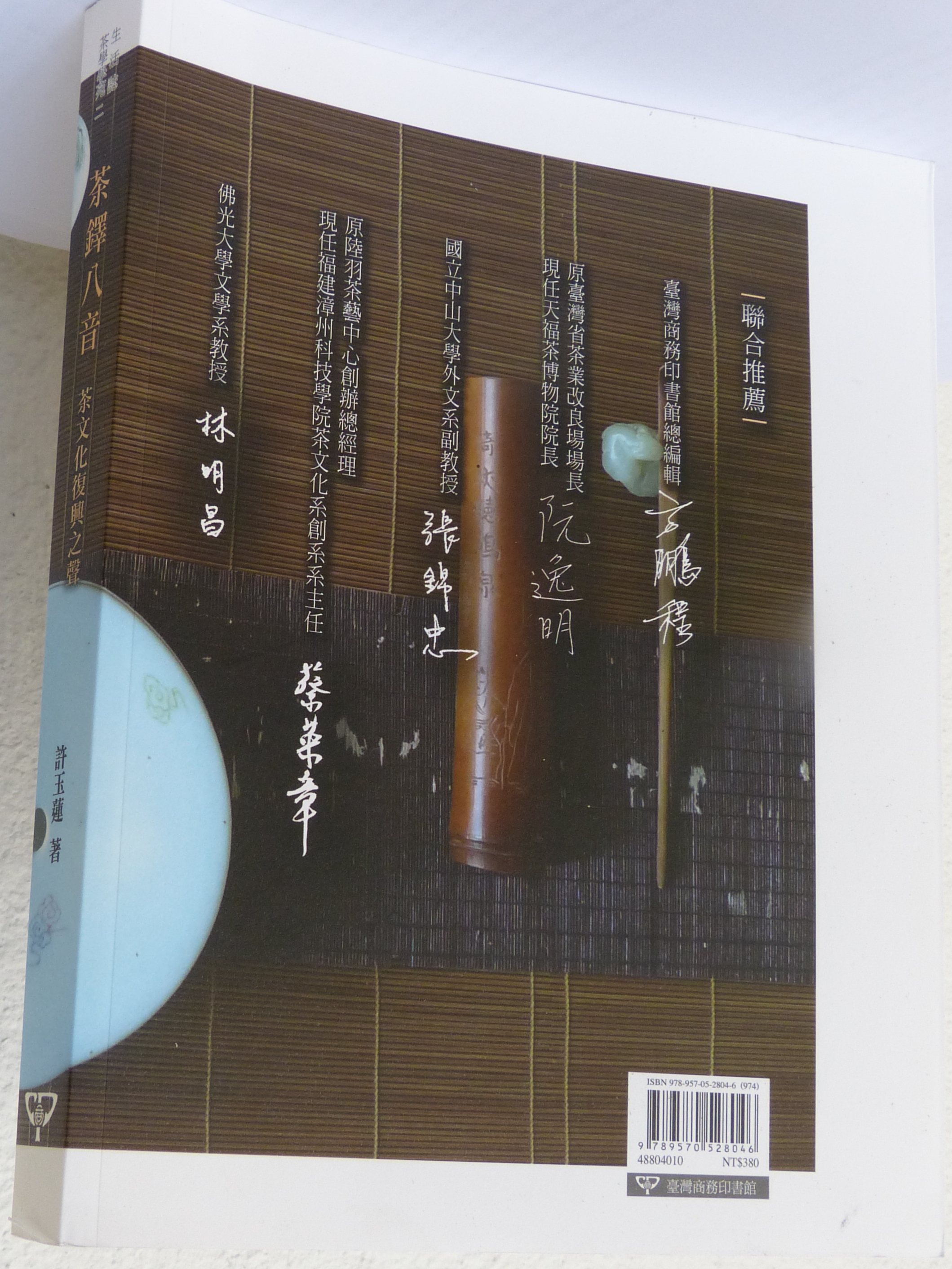
《茶铎八音-茶文化复兴之声》台湾商务印书馆出版-许玉莲著

茶道书籍介绍:《茶铎八音-茶文化复兴之声》

出版:台湾商务印书馆(20130301

ISBN9789570528046

作者:许玉莲

目录~介绍

现代茶思想茶铎八音

序-品茶的生活艺术.方鹏程

序 –那个时代,那杯茶.张锦忠

序-《茶鐸八音》茶文化復興之聲.蔡荣章

序 -我的茶文化辨識系統.许玉莲

第一篇 茶道觀念
1 茶道藝術家的聖戰
2 泡茶的藝術美
3 品茗的藝術美
4 茶湯的藝術美
5 賞茶的藝術美
6 茶具上的標籤可去可留
7 茶道無正式與非正式之分
8 茶席茶會需要音樂陪襯嗎
9 茶道作品要說自己的話
10 茶席與音樂的關係
11 茶法的真義
12 誰來泡茶的重要性
13 喝茶慢的必要
14 茶席上要有茶食嗎
15 茶與人、地、物關係
16 茶與人、地、物感應
17 茶湯是茶葉新生命
18 茶道老師必須親自泡茶奉茶喝茶
19 喝茶為何要會泡茶
20 要喝「好茶」
21 泡茶者資格檢驗表
22 我的珍茶一定要找他泡
23 等就等吧
24 茶會自備品杯使用說明
25 奉茶的原則
26 茶道藝術與茶道科學
27 自在品味
28 茶食與品茗間的爭議
29 花、茶、具與茶道的距離
30 隨性不同於自在

第二篇 茶文化復興
1 泡茶者該有什麼表情
2 辦中學生茶藝生活營聚焦在哪裡
3 馬來西亞茶道在哪裡
4 現在時空的茶文化要穿什麼服飾來泡茶
5 茶文化復興初期十年的茶館
6 錯過茶文化復興的茶館
7 馬國茶文化復興的快速發展
8 馬來西亞茶文化的誕生
9 盡是吃東西的茶館
10 杭州茶館見聞記與觀後感
11 他們為什麼要學茶
12 為馬來西亞的茶文化復興記下一筆
13 穿自己的茶衣
14 是壞習慣不是傳統茶文化
15 如何讓陌生人進入喝茶領域
16 您不知道他們是怎麼看待茶的
17 茶道藝術展演應如何安排
18 別低估了茶友的能力
19 我對自己負責
20 「創新」不一定是好的「創作」

第三篇 泡茶
1 泡茶新舊觀念
2 茶葉不骯髒
3 第一泡就把茶泡好
4 溫潤泡也不在普洱茶運用
5 茶葉不能捏碎沖泡
6 泡茶的繁與簡、難與易
7 老茶不必溫潤泡
8 如何看待老六堡的陳放味
9 初學者如何學泡茶
10 浸久一點與浸快一些
11 撿起打翻了的茶
12 沖泡茶之碎片
13 不舒服時要「喝對」茶
14 不同人泡的茶有不同效果
15 風格各異還是風格有誤
16 茶杯衛生的處理
17 泡茶者的投入與感染
18 泡茶者調整茶味後再奉茶之談
19 這麼多人的泡茶練習怎麼辦
20 你泡茶我學功夫
21 怎樣叫做把茶「泡好」了

第四篇 品茶
1 品味茶的相、色香味與渣
2 團揉茶的風格與享用
3 新舊佛手茶的欣賞
4 思念老焙火烏龍茶
5 傳統型、熟香型及清香型鐵觀音之?
6 茶的好壞我知道
7 將龍井放成老茶
8 新老茶的欣賞
9 為什麼要開一堂課叫〈品老茶研習班〉

第五篇 器物
1 泡茶可使用不同茶器
2 選泡茶器的真義
3 紫砂壺牽強附會的說法
4 這樣那樣的壺泡茶特別好喝嗎
5 茶具與泡茶品茗的關係
6 杯子質地與品茗關係之測試報告

第六篇 茶會
1 茶道表演的現代精神
2 龍井品茗會
3 無我茶會之抽籤談
4 「品茗茶會」商品化的過程
5 無我茶會之茶席、泡茶談
6 普洱六堡水仙茶會記
7 招待老師喝茶的錯誤實例

第七篇 推廣
1 時髦觀音茶的弊病
2 茶商品是茶文化與茶的結合
3 茶企業設宴不喝茶
4 餐廳供應茶水的新方向
5 茶的香味怎麼說
6 茶葉產品說明的編寫
7 茶葉產品說明的培訓手?
8 製茶、賣茶也要會泡茶喝茶
9 賣茶從業員需要具備資格嗎
10 檳城茶會記
11 是茶會活動還是品茗商品
12 買茶來喝與買茶投資
13 發展茶文化沒茶泡

第八篇 品茗館
1 泡茶師在職場的地位
2 泡茶藝術家
3 泡茶師掌席時的工作
4 茶譜的規劃
5 泡茶師的道場
6 為新年茶會規劃的茶譜
7 為敏感體質茶友規劃的茶譜
8 給孤獨長者的茶譜規劃
9 誰上品茗館喝茶
10 品茗館營運法則
11 老茶品茗館開張
12 「老茶品茗館」泡茶席設置
13 現在開設品茗館的時代性意義
14 三十年從茶藝館到了品茗館
15 我們急切需要的品茗館

订购联络:http://www.cptw.com.tw

e-mail: fan@cptw.com.tw               

电话(台北): 02-23713712#57  传真: 02-23710274

http://www.cptw.com.tw/BookDetail.aspx?bokno=12436010

现代茶思想茶铎八音许玉莲

  (1771)

品茗馆之武夷茶.龙凤团茶-许玉莲

品茗馆之武夷茶.龙凤团茶. 2006年制

许玉莲.文/摄影

现代茶思想武夷茶.龙凤团茶

饼头(成品一百克重)从当初青饼的浅青黄色转变成黄褐色,边缘且带点微红,显润泽感。饼茶边缘因经过七年的存放,接触空气,已开始松开,呈现一层层梳理整齐的茶叶、条理分明,手法干净利落,饼面与饼底压制得细致。

现代茶思想武夷茶.龙凤团茶

从饼边缘的缝隙嗅闻,有亁木的清香,那是大太阳晒过的“晴味”。茶干被热水浇淋,这股“晴味”也随着水气传出。

现代茶思想武夷茶.龙凤团茶

茶汤黄澄澄,水感柔,入口带有橘子皮“辛”的气息。

品茗时滋味浓强,但显然已步出新茶时类似青叶子的草腥味,转变收敛成一股成熟的梅子香味。

苦了过后整个舌底生出韵味,喉底带有一种非甜美型的山野果子的甜,有一缕清新、鲜爽之口感。

现代茶思想武夷茶.龙凤团茶

赏茶渣看出大多属于嫩芽嫩叶,二、三片较成熟的吧,有些叶子锯齿边上微红,带梗。它们每一片都千娇百媚,似一个个生命在呼唤着、呼吸着,在跳舞,还充满着温暖的香气呢。

现代茶思想武夷茶.龙凤团茶e

此茶是为“乔家重辟武夷茶路150周年纪念”而做的“龙凤团茶”,想必期望可捕抓一些那个年代的风貌与韵味。然而品茗时不宜仰赖“茶叶的故事”,有故事听就觉得好,无故事就兴趣缺缺,我们品茗时应以茶品茶。

现代茶思想武夷茶.龙凤团茶g

此茶要如何归类?压成饼状的茶就是普洱吗?不,此茶不属普洱青饼范畴,普洱青饼先炒青、后揉捻、再将之摊放太阳底下晒青,最终压制,普洱青饼冲泡时多带一股“晒青烟味”,它并无这种特征。

宋.龙凤团茶蒸青压榨,去汁制饼,此茶亦无蒸青迹象,不属于此范畴,它采武夷茶原料做成武夷茶,最后压制,估计它属于炒青制作,因它隐约散发武夷岩茶的香韵,应可归类武夷茶。

现代茶思想武夷茶.龙凤团茶f

  (4036)

《現代茶道思想》.目录~介绍-蔡荣章著

茶道书籍介绍:《現代茶道思想》

出版:台湾商务印书馆(20130301

ISBN9789570528152

作者:蔡荣章

目录~介绍

现代茶道思想蔡荣章
序 茶道思想引出茶文化方向
第一篇 茶與藝術
1 賞石與泡茶之間
2 茶道裡的美學概念
3 茶道與抽象藝術
4 從「茶道學習」到「抽象概念」的產生
5 茶道上純品茗的抽象之美
6 茶道空寂之美
7 深談空寂
8 茶道藝術家與茶湯作品
9 從通俗茶道到純茶道
10 茶湯,這件泡茶者的藝術作品
11 茶道藝術的本體及其應用
12 茶文化裡的美與藝術
13 無我茶會表現的茶道藝術
14 從泡茶師到茶道藝術家
15 茶道裡的藝術內涵

第二篇 茶道流派
1 論茶道的規格性與風格差異
2 談茶道的「空寂」
3 「茶道流派」的爭議
4 茶道的劇本人人寫
5 我走過的茶道之路

第三篇 茶道境界
1 茶道的重心在修身而不在茶嗎
2 茶道上的牽強附會之說
3 是「撐船漢」還是「弄潮人」
4 道是方法.道是路.道是境界.道是目的.道是新生命的起點
5 茶道的獨特境界-無
6 茶道的利他觀念
7 茶道裡的無何有之鄉
8 茶,永遠有其苦澀的一面
9 茶道的內涵
10 茶道兩張結構圖
11 茶道兩張結構圖(之圖)
12 讓自己泡在茶湯三個月
13 支撐茶文化的三根支柱
14 茶湯是茶道的靈魂

第四篇 泡茶
1 學會削皮才能吃到肉
2 泡茶師箴言
3 泡好茶的涵義
4 我們在泡茶上所下的功夫有沒有輸給學琴的人
5 泡茶的三個基本觀念
6 各種泡茶情況的茶水比例
7 茶湯標準濃度的界定
8 評鑑泡茶法與品飲泡茶法
9 車輪式泡茶練習法
10 茶席桌面四區塊
11 泡茶者的服裝
12 不穿戲服泡茶
13 小壺茶法的實事求是

第五篇 茶人與稱謂
1 茶人的「茶道生活」與音樂家的「音樂生活」
2 「茶人」一詞的應用
3 茶界稱謂
4 泡茶師檢定怎麼考
5 茶界修道者頒證
6 自家泡茶師與職業泡茶師

第六篇 市場與推廣
1 從泡茶與思想帶動茶文化發展
2 茶的文化性值多少錢
3 茶是容易保存的食品
4 茶與文化創意產業
5 某某茶在奢侈品行列嗎
6 品茗館專業泡茶席的設計
7 「品茗館泡茶席」建構說明
8 論小包裝茶的功過
9 茶館復興
10 泡茶師為客人泡茶的品茗館
11 茶葉市場與茶湯市場
12 將每批茶的泡法告訴客人

第七篇 品賞與評鑑
1 茶湯品飲之內涵分析
2 喝好茶、泡好茶、用好具的意義
3 賞茶、評茶、品茶
4 好茶好茶具有其絕對價值嗎
5 種茶難製茶更難喝茶難上加難
6 茶,讓人深思的一杯茶
7 茶,它的面部表情
8 茶,它的茶湯表情
9 茶,它的身材與體態
10 茶湯香、味、性的認識、欣賞與介紹
11 移愛入湯移愛入人

第八篇 茶器
1 初學者買什麼壺
2 從泡茶電水壺的誕生?起
3 計時器使用的爭議
4 需要用雙杯喝茶嗎
5 從茶車到品茗館的茶席
6 泡茶盤變遷史
7 茶荷與茶盅的誕生
8 壺盅你儂我儂
9 旅行茶具的先行部隊
10 可愛的隨身瓶

第九篇 教育
1 「茶學書庫分類索引」之建立
2 用現代的語言說現代的茶道
3 茶道展演與茶藝歌舞
4 高校茶文化系要不要教茶藝歌舞
5 我們要有個現代茶思想網
6 從三國茶道到四國茶道
7 讀茶文化系,畢業去賣茶
8 「茶思想研討」的課上些什麼
9 人人有權知道茶藝術

第十篇 識茶
1 喝茶普及化與茶葉名稱的關係
2 規格茶與標示茶
3 製茶一些用語的界定
4 述說老茶
5 焙火茶
6 泡壞了不改茶的真面目
7 茶,新生命的誕生
8 茶,它的生死辯
9 波動影響著茶湯

第十一篇 品茗環境
1 茶席風格的表現
2 勿走錯茶席設計之路
3 草庵式茶席的意義
4 水盂在茶席上的地位
5 煮水器要放泡茶桌上嗎
6 茶如何在茶桌上表現主角地位
7 茶席設置與茶席設計
8 茶席,有茶道就夠了
9 唯要聲音與光影陪伴茶
10 輔茶器站著還是躺著好

第十二篇 茶會
1 無我茶會基本架構
2 現代版曲水茶宴
3 茶席設置與茶會舉辦
4 茶道展演要看些什麼
5 從獨飲到千人茶會
6 無我茶會有用嗎
7 無我茶會的傳播,師生對話錄
8 「接力泡」茶會如何進行
9 茶道藝術家的聯合茶湯作品欣賞會
10 茶湯作品欣賞會與宴會式茶會之別
11 茶道藝術家的茶會作品
12 無我茶會為何非要單邊奉茶不可
13 茶道藝術家的個人茶湯作品欣賞會

跋—蔡榮章茶道思想的經緯

现代茶道思想蔡荣章

订购联络:http://www.cptw.com.tw

e-mail: fan@cptw.com.tw               

电话: 02-23713712#57  传真: 02-23710274

http://www.cptw.com.tw/BookDetail.aspx?bokno=12436010

  (1842)

品茗馆之普洱茶-许玉莲

普洱茶.易武正山2002年制.阳春嫩尖

许玉莲./摄影

现代茶思想普洱茶

现代茶思想普洱茶2002

整块饼头(青饼)显露深沉的红褐色,似有一层薄薄的金泽包裹着它,那是岁月给它的加冕。把纸开封即传出一股叶子的清香味。

泡茶前用手细细把茶叶剥松,将已经拨开的茶条置入壶,用热水浸泡,出汤那一刻,空气中有股熏烟香,是那种在茶山上做茶,紧压之前先把毛茶蒸一蒸,蒸发上来的水气之气息,隐隐然还有当天的阳光与风的味道。

现代茶思想普洱茶汤

汤色是润亮的深金黄,珣丽灿烂。品茗时茶汤显露浓郁(新鲜)梅子香味,口感醇厚,茶汤的质感饱满,前几道还夹带些许苦味,有细细的收敛之感,这收敛感在口腔里引发回甘的感觉,叫人喝了还想再喝。

随后所出之茶汤,清甜口感一道比一道加强,顶峰时出现红枣味(煮熟透的枣皮),逐渐慢慢淡出,那口枣味叫人流连忘返。

现代茶思想普洱茶渣

欣赏茶渣属于品茗一大美事,看那完整无暇的叶底多富有生命力啊,如此柔软、姣美的体态,是茶叶从山上的一片叶子变成我们茶杯里的汤水,之后的另一种生命姿态。

剥茶时,除非逼不得已,否则别用任何利器往茶身上糳、凿、剁或敲碎。使用工具时,我们只不过请它帮忙将普洱茶稍微解开,仍然亲自用双手把茶叶一层层拆散。这样做当然那是因为我们爱茶,所以我们会温柔待茶不会轻易让茶折断受伤。同时也因为普洱茶到最后泡出来是否能够呈现美味、好不好喝,与茶在被解块时有没有被解得完完整整或支离破碎大有关系,漫不经心随意把茶块折断,茶味会变得粗糙、不集中。

  (2207)

品茗馆之岩茶白鸡冠-许玉莲

品茗馆之岩茶白鸡冠

许玉莲.文/摄影

现代茶思想白鸡冠2004

上图:岩茶白鸡冠-2004年制

现代茶思想白鸡冠2011

上图:岩茶白鸡冠-2011年制

茶干挺拔俊美,散发飘逸的凉津津的气息,轻轻一吸,顿时感觉喉底蠢蠢欲动要涌出泉水。一经浇热水,丰盛果香悠悠溢出,非常可爱。

汤色娇艳欲滴,叫人看着欢喜。茶汤质感柔软,含着享受一番,汤与口腔产生极佳的美丽触感。滋味浓稠,充满水蜜桃的香味,那香味醇厚细滑,溶化入身体每一个细胞,有饱满感。

现代茶思想白鸡冠2011

一直持续冲泡十多道,最后几道茶,滋味中隐隐然散发轻微的柠檬皮香味。把柠檬切片,用手指出力把柠檬汁压挤出来时,柠檬皮里的香油也会一起被挤出,就是那种香味。多浸久一会儿,柠檬皮香油味就会转变成“萎凋味”,鲜叶在萎凋室里做萎凋时所挥发的萎凋味道,比香油味较浓重一点。

现代茶思想白鸡冠柠檬

茶渣的身体美艳不可方物,滋润滋润的很有光泽。

老茶比新茶老实。

现代茶思想白鸡冠2011


  (3548)

俄罗斯茶文化-许玉莲

俄罗斯茶文化

许玉莲

俄茶文化主茶器是什么?

第一:Samovar煮水/煮茶器

说俄罗斯茶文化,需先说他们的茶具,茶具里最不可或缺的主要设备,用来煮热水的就叫做Samovar(茶炊),当俄罗斯人说“让我们来围着Samovar而坐”,意思即“让我们来喝杯茶”。但Samovar又不止是煮水器而已,它还有煮茶的功能,还可以同时煮二种茶。

茶炊的造型是可以让茶壶“窝”在一起的:茶炊底部是个瓮形的煮水器,顶部有个特别座位,让泡茶的茶壶坐在那里,而泡草药茶的茶壶则坐在这支茶壶的顶部上。

茶炊的煮水器,中间是一管垂直管道,管道可燃烧木材或木炭使水煮热,然后热水可在这里保持温度一整天,不够水时就加。煮水器不必坐在火坑或火炉上,故此它可以随意摆放在任何地方就设置茶席泡茶饮用。

当在煮着热水时,燃料的热气会一直往上移动,人们就利用这个热气,炖煮着顶部两壶茶。茶就一直泡在这里,随时预备着一整天的饮用。

煮水器有装置水龙头,方便取热水。它小的可容纳三公升水量,大的可装30公升水。

Samovar的设计,相信是除了可以煮热水、煮茶用,它也可以放在屋里当“暖炉”用,所以大家爱为炉而坐。茶炊有各种金属制成的:铜、青铜、铁,银是最典型,传统而富裕的通常喜欢采用瓷制造,深颜色釉彩,而且有金色装饰搭配,看起来很华丽的样子,他们还喜欢用民间故事的绘画作品来装饰。

俄罗斯茶文化

俄茶文化煮水/茶器

第二:Podstakannik金属杯架

传统上认为经典的俄罗斯茶法,他们会需要一个瓷茶杯来享用茶,但后来大众改用玻璃杯,无柄的,为了防热,它们都会被套进一个金属杯架,杯架名称为了玻璃杯安全取拿podstakannik,做工通常极之精细优美,可当作工艺品欣赏。

俄罗斯茶文化

俄茶文化的Zavarka是什么?

在许多其他地方,茶是茶叶在泡茶器内浸泡,达到了泡茶者预期的浓度,就可以倒出来饮用。

俄罗斯不一样,在俄罗斯,茶叶置入壶里,使用热气让它慢慢焖煮至沸,或至少五分钟,或可能一整天,然后泡制出极之浓强、集中的茶汤,那就叫作Zavarka(浓茶汤)。

Zavarka不单独喝,那味道很强烈。人们要喝茶时只需要拿一点点倒进杯,再加热水稀释茶汤至自己要求的口感。

选用什么茶叶?

在地理和文化上俄罗斯横跨欧洲与亚洲,故此他们的喝茶习惯也受到这两地如:中国及英国的影响。最初他们是饮用从中国进口而来的茶叶,有砖茶和散茶,后来喝红茶,有中国的祁门红茶,印度的红茶,近代也有锡兰红茶以及俄罗斯当地红茶品牌Russian Caravan,此茶带有烟熏香味。

此外他们还有药草茶、水果茶。他们喜欢将二、三种茶分别泡在不同的壶里,要喝时各倒一点进茶杯,依据自己喜爱的味道加热水调配。

20世纪以来,大众喝茶的喜好已经随着政治与经济局势调整,如今,大多数俄罗斯人喜欢浓郁香气和味道浓厚的锡兰红茶,仍然选择中国茶口味的属于老传统。

茶席如何设置?

通常在家里,家庭女主人把最心爱的客厅一角比如靠着窗户,可遥望户外景色的地方,摆上圆桌铺上桌布,茶炊就置放中央,团团围着它的有:

茶叶:散红茶收在茶罐里

泡茶器:瓷茶壶坐在茶炊的顶部

喝茶器:客人面前都有一套瓷杯、杯托、小茶匙或含杯架的玻璃杯

喝茶的调味物:方糖在瓷糖罐、蜂蜜、浓缩甜牛奶、果酱(数种口味如草莓、樱桃、蓝莓、黄莓、覆盆子)和切片柠檬

茶点:煎饼、馅饼(数种口味如苹果,樱桃,奶酪,卷心菜)

俄罗斯茶文化

茶叶冲泡法

茶炊的煮水器要煮热水。

把适当茶叶放进茶壶,加热水,置于茶炊顶部。

如果需要,准备多一支茶壶,投入茶叶,也加热水,置茶壶顶部。

任由茶炊的热气慢慢将茶煮沸。

通常中间的茶壶泡浓浓的红茶,顶部的茶壶,浸泡着当地任何药草茶。

怎样喝?大家喜欢喝什么,拿下来倒进茶杯,再从煮水器的水龙头加热水稀释,调整喜爱的味道,茶汤和热水的浓度比列通常是1:10。

调好之后,再加入糖、蜂蜜或果酱等增进风味。他们喜爱以果酱入茶。

有些人喜欢含着一块方糖在嘴里,一边喝茶。

这样喝茶为什么?由于天气非常寒冷,围着煮水器喝茶可取暖,热热的茶令身心温暖,甜甜的味道是营养与能量的来源。

此外很多人为自己的茶调味时几乎总会加柠檬片,或是倒入镶嵌着丁香的柠檬片里才喝。许因为茶叶有时会静置几个小时,变苦了,所以要调味。

泡茶者有指定是什么人吗?

俄罗斯茶文化延续英国茶道做法,家庭里地位最崇高的女性担任泡茶者,不假手于佣人或随便任何一位成员,表现了茶在他们生活里的重要性与尊贵。因此喝茶文化在俄罗斯,一般定义为:为家庭营造温暖和香气、热情和安全的象征。

什么时候喝茶呢?

俄罗斯人延续传统的喝茶习惯:每餐都要有提供,随时随地,不管白天晚上,饭后都要喝,尤其是当家人和朋友聚集时更要喝。

在他们的火车、办事处、餐厅到街边小贩都能找到当地必备的茶炊卖热茶或供应热茶。俄罗斯人认为“喝茶是一整天的事”,故此他们重视是否拥有一个保温功能良好的茶炊,可以让热水保持一整天的温度。现今茶炊多已经切换成电器茶炊,保温已不是问题。

  (5698)

第14届国际无我茶会 -2013年10月12日~16日于韩国举办,邀请报名Invitation:The 14th International Sans Self Tea Gathering Korea (Busan,Kyung Ju and Daegu), 12th to 16th October 2013

第14届国际无我茶会 -2013 10月12日~16日于韩国南韩首尔光化门庆州釜山举办,邀请报名 

We cordially invite you to attend

The 14th International Sans Self Tea Gathering

Korea12th to 16th October 2013

2013年无我茶会注册费:USD550.00(20130719修正)


无我茶会sans self tea gathering~14届邀请函

无我茶会sans self tea gathering~14届邀请函

下图:2008年,11届国际无我茶会在韩国举办

下图:品茗茶会

品茗茶会

品茗茶会

品茗茶会

(3017)

2013-第14届无我茶会,2013年 10月 12日~ 16日将在韩国举行The14th‘Sans Self Tea Gathering’will hold in Korea,Oct,2013

The 14th ‘Sans Self Tea Gathering’will hold in Korea, Oct,2013

2013-第14届无我茶会,10月12日~ 16日将在韩国举行

无我茶会2013年的第14届将在韩国举办。

2015年的第15届将在中国杭州举行。

以下是历届国际无我茶会一览表:

19901218.一届台北

19911017.二届武夷山

19921109.三届日本京都

19931013.四届韩国首尔

19951027.五届武夷山

19971122.六届台北

19991016.七届杭州

20011007.八届日本静冈

20040821.九届新加坡

20051102.十届武夷山

20071013.十一届韩国益山

20091017.十二届美国旧金山

20110528.十三届台北

下图是2007.10第11届国际无我茶会在韩国圆光大学举行。

下图是1999.10第7届国际无我茶会在浙江杭州西湖畔举行。


(2291)

奉茶的原则-许玉莲

奉茶的原则

许玉莲

2012.9月刊发表于中国海峡茶道杂志每月专栏

我们要谈的这个题目是包括了茶界或茶界以外的范围,大家很奇怪,认为这是小事有什么好说的,我们一直在做啊。看一看,因为我们都做不好所以要谈,举例一怎么奉茶给讲台上的老师?往往老师还没上台,一杯茶已经摆放在那里,谁也不知道那杯茶究竟要给谁,老师也没敢喝,这算奉茶吗?举例二开会时是怎么奉茶给与会人员?参加会议人士未进场,整个桌面已经摆满一杯杯茶(至于用什么茶用什么样的茶具、茶法是另一个话题。有些不提供茶,只摆着一瓶瓶的矿泉水也是另一个话题。),大家犹豫一番才能确定哪一杯是谁的,这并没有奉茶的诚意。举例三很多茶叶卖场为客人准备茶时用热水去淋或煮杯子、奉茶时用夹子去夹茶杯,这些无论要表示茶具是温热或卫生的手法都显得非常粗糙。

从以上这些情况可看出,我们在茶文化发展工作方面做得还不够深刻不够细腻,当我们说我们的茶文化很有素养很有境界的时候,事实上我们之中许多人“奉茶”的基本功也做不好,如果连这点也做不好,我们又将要如何说茶文化内涵呢。

奉茶时需要记住的几点原则有:一.无论人多人少、使用小壶茶法或大壶茶法,都必须要冲泡出茶应该有的味道,很多人以为用“大壶茶”奉茶就表示可以随便泡,人多的场合就可以乱来,那并不正确。2011年5月作者出席台北第十三届无我茶会,在好几场大型晚宴上观察到工作人员都在旁设泡茶工作桌,为上千位与会者泡出、奉上一杯好喝的茶,证明人多或壶的问题都可以被克服。

二.奉茶时的茶汤温度要有适口的考虑,比如这次采用大杯奉茶,可能要喝上三十分钟,要如何使茶汤在开始喝时浓度就已到位又不太热,结尾时不会太浓又不会太冷?比如使用小杯奉茶时,必须每一道茶现泡现奉以维持它的温度。不要只顾着为了工作方便而忽略品茶者的享用。

三.奉茶要奉得真心诚意,“奉茶”不能太过机械化般例行公事,像早早就把茶摆在桌面上,那纯粹为了方便主办方解决人力和泡茶所带来的“麻烦”,因而提早做,这样便失去了奉茶的意义。奉茶的意义包括我们对来宾表示尊敬和感谢,我们该怎样表达泡茶者的这一番心意让对方知道?比如老师讲课,我们可在一旁先准备一壶、一杯、热水及少许茶叶,待老师上了讲台说话,负责奉茶者便可轻轻的把茶泡出,将茶捧出讲台,在不打扰、不打断老师讲话的情况下,可向老师笑笑或眼神打个招呼,把茶郑重放在老师前面,这样我们即能够清楚表达“这杯茶是专为老师而做的”。还有,开会时的奉茶,应该在与会者抵达后,稍息,才把茶奉上,即是来一个奉一个。

四.所有茶具必须在使用前已经处理好卫生问题,而不必在客人面前“洗烫“一番给客人看,可参考精致餐厅的做法,谁会在餐桌上“洗烫”餐具给客人看后才上菜的呢?

在一些严肃或政要的会议上奉茶,当然无可避免会多了其他如饮食安全或人身安全、保密的需要等问题要解决,茶文化经营者有必要把这些也一拼纳入泡茶奉茶的考虑,提出方案让主办者能够放心让承办方奉茶,茶文化的发展就真正深入到精致的领域。


  (2156)